
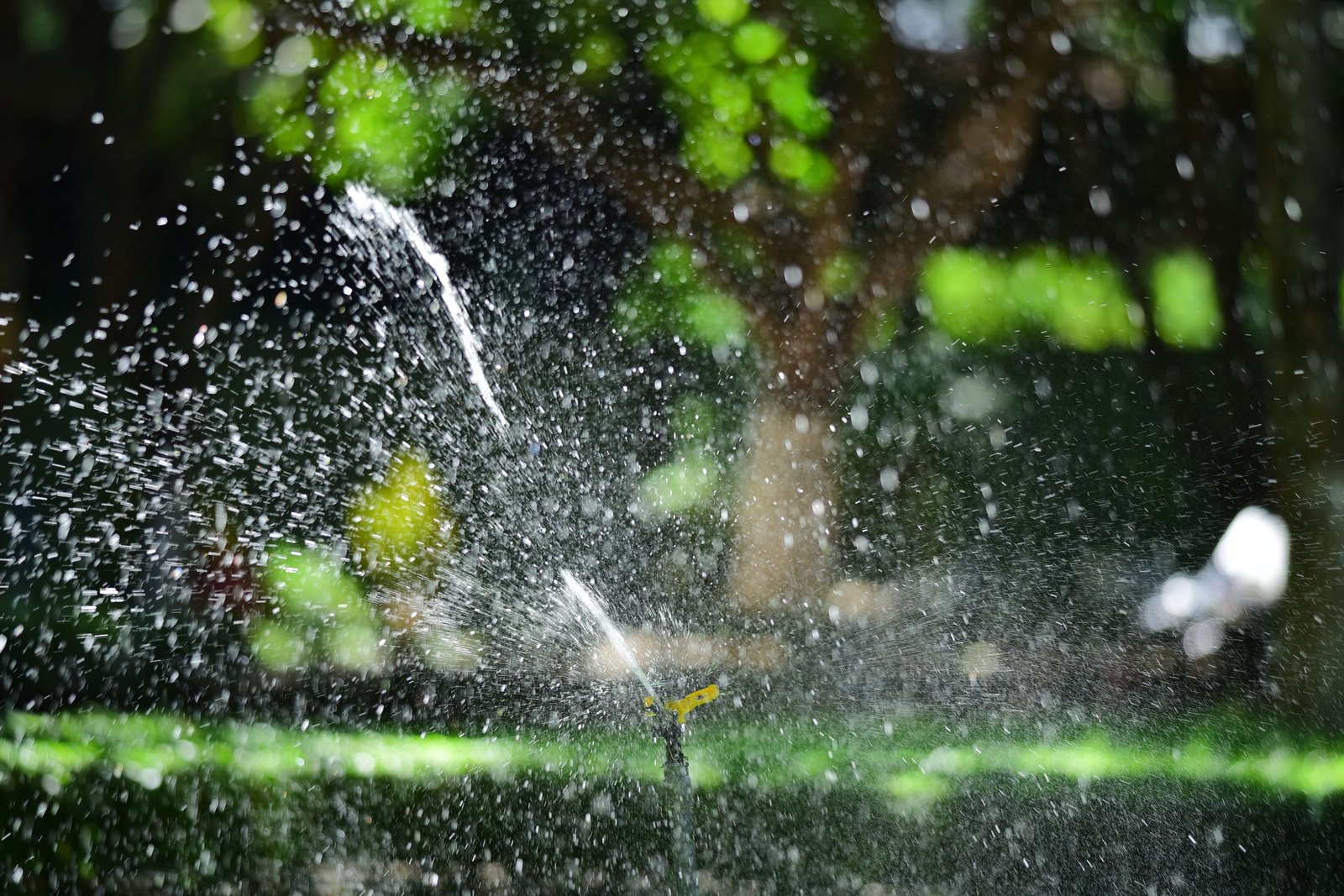
How Often Should You Water a Lawn in Lubbock?
How often should you water a lawn in Lubbock? Most lawns here do fine on about an inch of water a week, split into two or three mornings. Bermuda grass is the usual lawn here, and it would rather get a deep soak twice a week than a little sprinkle every day. Water early, before the wind picks up and the sun starts baking the yard. That gives the water time to sink into our caliche soil instead of evaporating off the top.
Watch the grass, not the calendar. If footprints stay visible after you walk across the lawn, or the blades start folding up in the heat, it is thirsty. New sod is the exception – it needs water every day for the first couple of weeks until the roots take hold. And keep an eye on Lubbock watering rules. The city puts limits on outdoor watering, especially in summer, so check the current schedule before you set your sprinklers and forget them.
A few things that make a real difference here: mow a little higher in July and August so the grass shades its own roots, aerate once a year so water can actually get through that hard clay, and fix any sprinkler heads that spray the driveway. If your lawn has brown patches that never seem to improve no matter how much you water, the problem might be the soil, not the schedule. Call (806) 419-6465 and we will come take a look and give you a free estimate.
Water a Lawn in Lubbock: A Simple Schedule
For most of the growing season, a Lubbock lawn does best on about an inch of water a week, given in two or three deep waterings rather than a little bit every day. In spring and fall, when the weather is cooler, twice a week is usually plenty.
In the heat of July and August, three times a week is more realistic, and on a windy week you may need to add a session rather than stretch the ones you have. The goal is to wet the soil several inches down, so the roots grow deep instead of sitting near the surface waiting for the next sprinkle.
A quick way to check is to push a screwdriver into the lawn a few hours after watering: if it slides in easily for several inches, the water got where it needed to go. That is how often to water a lawn in Lubbock in the growing season: two or three deep morning waterings a week.
Early morning is the best time to water here, ideally before the sun is high and the wind picks up. Watering in the middle of the day loses a lot to evaporation, and watering late in the evening leaves the grass damp overnight, which is when fungus problems like to start.
If your irrigation system runs on a timer, set it for the early hours and check it every few weeks, because a zone that is watering the sidewalk instead of the lawn is not helping anyone.
After a good rain, skip a watering and let the soil dry out a bit before the next one; Lubbock rain may not come often, but when it does, it counts.
Water a Lawn in Lubbock: How to Tell If It Is Thirsty
The grass will tell you before the calendar does. Footprints that stay visible after you walk across the lawn, blades that fold up or take on a dull, blue-green color, and patches that spring back slowly are all signs the lawn needs water.
On the other hand, a lawn that is squishy underfoot, or one with mushrooms popping up after watering, is probably getting too much.
The screwdriver test works here too, and so does simply watching which parts of the yard dry out first: the sunny strip along the driveway, the slope, and the corners the sprinklers miss will always show stress before the rest of the lawn.
Grass type matters as well. Bermuda, which covers most lawns in Lubbock, is a warm-season grass that wants water most when it is actively growing, from late spring through early fall, and it will go dormant and brown in winter whether you water it or not.
Buffalo grass needs noticeably less water than Bermuda and is happy with a deeper, less frequent schedule, which is one reason it suits the drier corners of a yard.
If you are not sure what you have, look at how it behaves in summer: Bermuda grows fast and thick when it is watered, while buffalo stays a little thinner and more relaxed, and it does not mind being left a bit longer between waterings.
Water a Lawn in Lubbock: New Lawns, Shady Spots & Dry Patches
Not every part of a yard wants the same water. A newly laid lawn or fresh sod needs light, frequent watering for the first couple of weeks, just enough to keep the top layer damp while the roots take hold, and then a gradual shift to deeper, less frequent watering as it establishes.
Shady spots under big trees need less water than the open lawn, and they also compete with tree roots for whatever moisture is there. The edges along driveways and sidewalks dry out fastest, because the concrete heats up and reflects that heat back onto the grass, so those strips are usually the first to show brown.
If you have a lawn care routine that includes mowing a little higher in July and August, the taller grass shades its own roots and holds moisture longer, which takes some pressure off the watering schedule.
Water a Lawn in Lubbock: When Watering Is Not the Problem
Sometimes a lawn stays patchy no matter how much you water it, and the problem is not the water at all. A sprinkler head that is clogged, tilted, or broken can leave a dry spot right next to a soggy one, and a zone that is not covering evenly will show up as stripes across the lawn.
Compacted soil, which is common where caliche sits close to the surface, can also stop water from soaking in, so it runs off instead of reaching the roots. If you have checked the schedule, the timing, and the coverage and the lawn still struggles, it is worth having the system and the soil looked at together.
Our landscaping and lawn services in Lubbock cover both sides of that, from irrigation checks to lawn care, and the same watering habits work just as well in the surrounding towns, whether that is a new lawn in Wolfforth or a low-water yard in Shallowater.


4 Comments