
How to Winterize Your Sprinkler System in Lubbock, TX
November in Lubbock has a way of sneaking up on you. One week you are still running the sprinklers after a warm, windy afternoon, and the next you are scraping frost off the windshield before work. If you own a home here, that in-between season is your warning: it is time to winterize sprinkler system Lubbock before a hard freeze turns a quiet irrigation system into a spring repair bill. Here is a step-by-step guide Lubbock homeowners can actually follow in a single afternoon.
This guide covers when to do it, how to shut the water off, how to drain the lines, what to insulate, and what to set on the controller. You can do most of it yourself. And if any part feels like more than you want to take on — especially the compressed-air blowout — call in help rather than risk a cracked pipe.

Why Lubbock freezes are so hard on sprinklers
Lubbock does not get the long, deep winters you see farther north, and that is exactly what makes it tricky. We get warm days, then a sharp cold snap, then a warm day again. Water left in a pipe freezes, thaws, and freezes again, and each cycle can push a crack a little farther. A pipe that survived one cold night can split on the next one.
Our soil does not help. Much of Lubbock sits on caliche — that hard, chalky layer under the topsoil — which drains poorly, so water can sit around shallow lines and fittings. Shallow lines are common here because the ground is so hard to dig. Add in the West Texas wind, which strips heat off exposed pipes and backflow preventers fast, and you have a system that is more exposed than it looks. Frozen water expands, and that pressure can crack PVC pipe, split a backflow preventer, and damage valves. Those are the repairs that show up in March as wet spots, low pressure, and zones that will not turn on.
When to Winterize Sprinkler System Lubbock
Do not wait for a forecast that says 20 degrees. In Lubbock, the average first freeze usually arrives around the end of October, according to the National Weather Service, and the first hard freeze — the kind that stays below freezing for hours — often follows in November. The best window to winterize your sprinkler system in Lubbock is late October to early November — so aim to finish before the first hard freeze arrives.
Go by the forecast, not the calendar alone. If the overnight low is headed for 28 degrees or below, or freezing temperatures are expected to last more than a few hours, your system should already be winterized. A light frost on the grass is one thing; a night that stays in the 20s is another. Watch your lawn for the cue, too: Bermuda grass, which covers most Lubbock lawns, goes dormant and turns tan as temperatures drop, and dormant Bermuda needs very little water. If you are unsure how much to water in the shoulder season, read our guide on how often to water your lawn in Lubbock, Texas before you change your schedule.
How to Winterize Sprinkler System Lubbock, Step by Step
Go slow, keep track of what you open and close, and never leave a valve half-finished. The goal is simple: get the water out, keep the rest dry, and leave the controller so it cannot turn the system back on.
Step 1: Shut off the water to the irrigation system
Find the irrigation shut-off valve — usually in a valve box near the backflow preventer, in the garage, or where the irrigation line branches off the main water line — and turn it off completely. Do not just turn the controller off. The controller only controls the valves, and water can still sit in the lines behind them.
While you are there, open the drain valves or test cocks on the backflow preventer and let any water in that brass assembly drain out. Leave them open at a 45-degree angle for the winter so any water left inside has somewhere to go instead of sitting against a seal and freezing. Make a note of where everything is now, because you will need to close those same test cocks in spring.
Step 2: Drain the lines — and understand the blowout
Once the water is off, the lines still hold water — and getting that water out is the whole point when you winterize your sprinkler system in Lubbock. Some systems have manual drain valves at the low points — open them and let the lines drain by gravity. Others have automatic drain valves that do this on their own when the pressure drops. Either way, gravity alone rarely gets every last bit out, especially on a flat Lubbock lot where the lines do not slope much.
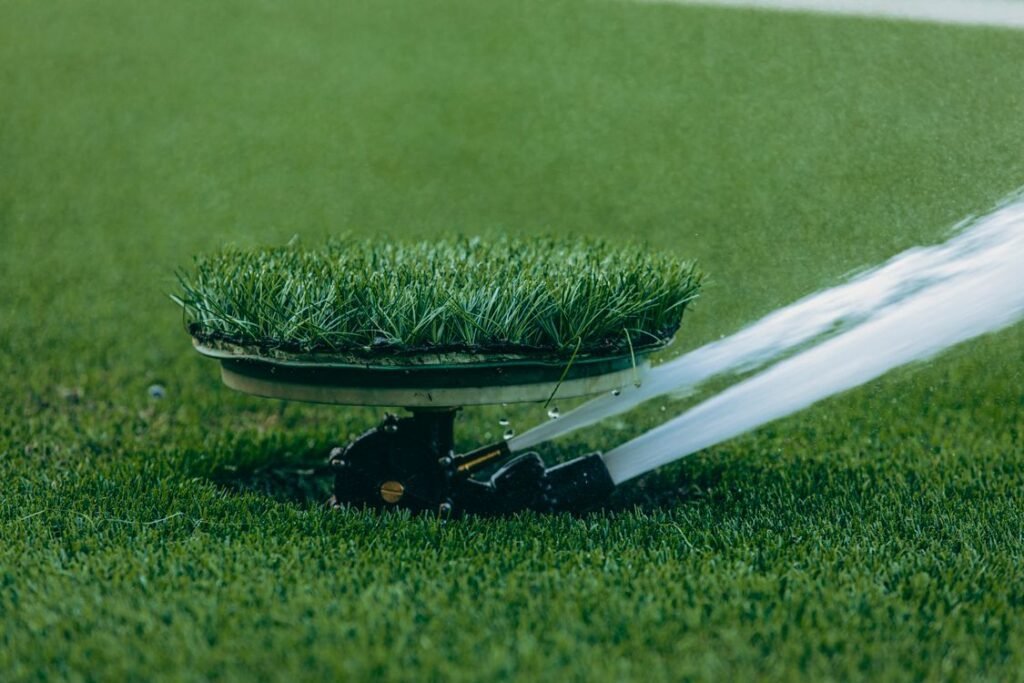
That is why most professionals use a blowout: compressed air is pushed through each zone, one at a time, to force the remaining water out of the sprinkler heads. If you do this yourself, use a compressor with a regulator, keep the pressure low, and work zone by zone. As a general guide, many irrigation manufacturers recommend staying under about 50 PSI for polyethylene pipe and about 80 PSI for PVC — and never exceeding your own system’s rating. Always wear eye protection, never stand over a sprinkler head while air is moving through it, and stop a zone as soon as the spray turns to mist. Too much pressure, or air left running in a dry zone for too long, can damage heads and fittings. If you do not have the right compressor, the right fittings, or a clear idea where the blowout connection is, hand this step to a professional. A proper blowout is far cheaper than replacing cracked pipe, and our team handles sprinkler repair in Lubbock year-round — see the full list on our services page.
Step 3: Insulate the backflow preventer and exposed pipes
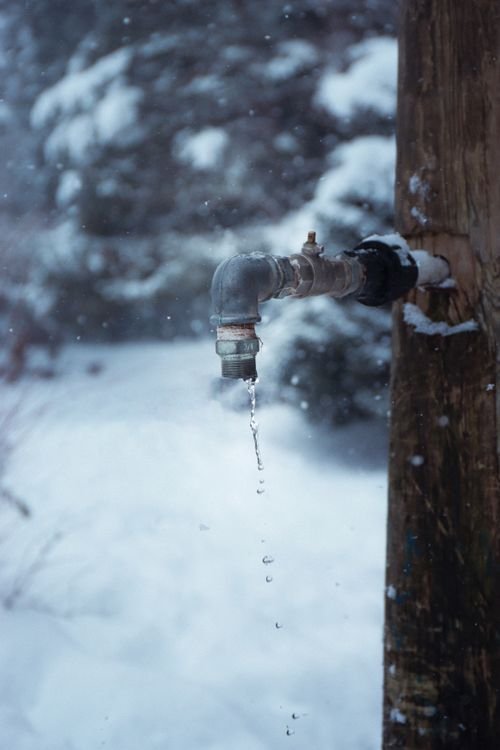
This is the step people skip, and it is often the one that costs them. The backflow preventer is usually above ground, made of brass, and fully exposed to the wind, so it freezes before anything buried does. Wrap it in foam pipe insulation and cover it with an insulated backflow cover or a heavy, weatherproof pouch, and tape the seams so wind cannot lift the cover off. Do the same for any exposed pipe: the line coming out of the house, the shut-off valve, and any pipe running along a fence or foundation. A towel wrapped in plastic is better than nothing on a one-night freeze, but it is not a plan for the whole winter — get the proper insulation on before the first hard freeze, and check it after any big windstorm.
Step 4: Set the controller for winter
Turn the controller to the “off” or “rain” setting, or use its winter mode if it has one. Do not just leave it running with a short schedule. A controller that fires on a freezing morning can put water on a walkway that turns to ice, and it can refill lines you just drained. If your controller has a battery backup, leave the battery in place so the clock and program are saved for spring — just make sure the system itself is off. For a smart controller, set it to suspend watering for the season and confirm the change in the app before you walk away.
Lubbock has winter watering rules, and they matter here. From October 1 to March 31, watering is limited to two days a week, and do not water at all when it is below 35 degrees — watering in a freeze just makes ice and can damage the system you have just drained. If your yard genuinely needs a different schedule, the City of Lubbock has a variance form for that — check it before you set the controller, not after.
What if you missed the first freeze?
Do not panic, and do not try to run water through a frozen system. If the freeze was short and only the grass was frosted, you may be fine — winterize as soon as temperatures rise above freezing and check for leaks. If you see a cracked backflow preventer, water pooling where it should not be, or a zone that holds no pressure, that is damage, not a setting. Shut the water off again and get it looked at. Through the rest of winter, watch for soft, wet spots that suggest a slow leak, especially over caliche where water does not soak away quickly. Those same winter months are also when we help homeowners with snow removal, so the yard is not the only thing that needs a winter plan.
Spring start-up checklist
Put a note on the calendar now so spring does not catch you off guard. When the last hard freeze has passed, work through this list in order:
- Close the drain valves and test cocks on the backflow preventer that you left open for winter.
- Remove the insulation cover and check the backflow preventer for cracks or drips.
- Turn the water on slowly and walk each zone, looking for leaks at heads, valves, and joints.
- Check each sprinkler head for damage, clean clogged nozzles, and adjust the spray so it hits the lawn, not the driveway.
- Set the controller for spring, and water deeply but less often as your Bermuda wakes up.
- If a zone will not pressurize, stop and get it repaired before the summer heat arrives.
That spring check is also a good moment to look at the lawn itself. Dormant Bermuda comes back slowly, and regular lawn care through the growing season is what makes the difference between a lawn that recovers and one that struggles all summer.
Frequently asked questions
Do I need to winterize my sprinkler system in Lubbock every year? Yes. Even a mild winter can have one hard freeze, and one night is enough to crack a backflow preventer or a shallow line.
Can I winterize my sprinkler system without a compressor? Sometimes, if your system has good drain valves and the lines slope well. On most flat Lubbock lots, gravity alone leaves water behind, which is why a blowout is the safer choice when a cold snap threatens.
Should I water my lawn at all in winter? Dormant Bermuda needs very little water, and usually none from the sprinkler system. Never run the system when temperatures will fall below freezing that night.
Winterizing is not the most exciting job on the list, but it is one of the cheapest. An afternoon in November, a bit of foam insulation, and a controller set to off can save you a spring of digging and patching. Ready to winterize your sprinkler system Lubbock-style before the next cold front? Get it done now, and your sprinklers will be ready when the Bermuda wakes up.


2 Comments