
Yard Drainage in Lubbock: 7 Mistakes That Leave Standing Water
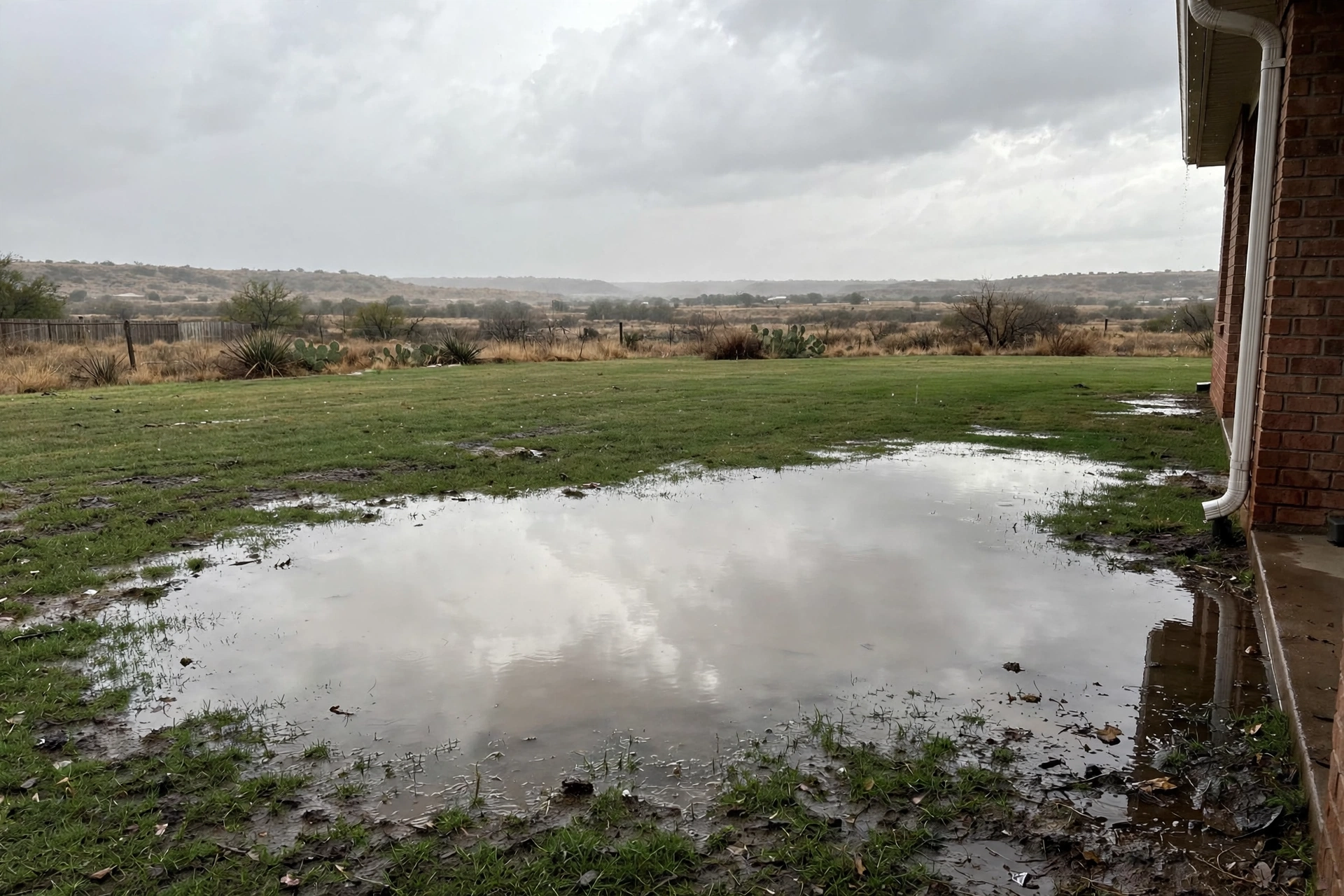
Saturday’s rain soaked Lubbock yards — 0.40 inches fell on 14 November, with thunderstorms through the evening — and by Monday morning, a lot of homeowners will walk outside and find the same thing: a low spot that is still holding water, a soggy strip along the foundation, a lawn that squishes underfoot. Most of the time it is not the rain’s fault. It is a drainage mistake made months ago, and the rain just makes it visible. Here are the seven we see most often in Lubbock — and what to do instead.
Ignoring where the water actually comes from
Most people start digging where the puddle is. That is the wrong place to start. Water in a low spot usually started somewhere else — a gutter dumping at the foundation, a neighbour’s slope, a driveway that sends runoff across the lawn.
Do this instead: Walk the yard during the rain, or right after it, and trace the water. Follow it from where it lands to where it stops. Fix the source first; the puddle is only the symptom.
Grading that slopes toward the house
Over time, soil settles. Beds sink, lawns flatten, and a grade that once fell away from the house can end up flat — or worse, sloping back toward the foundation. That is how water ends up against the wall instead of out in the yard.
Do this instead: Check the grade with your eyes after rain: water should move away from the house, not toward it. Regrade so the soil falls away from the foundation, and keep soil and mulch below the siding line.
Downspouts ending right at the foundation
A downspout that stops a few inches from the wall pours a whole roof’s worth of water into one spot, right where it can do the most damage. It is the single most common cause of a soggy strip along the house.
Do this instead: Extend downspouts away from the house and onto a slope or into a drain, and keep them clear of leaves. It is a small job, and it fixes more standing water than most bigger ones.
Compacted caliche and clay that water cannot soak into
Lubbock soil is heavy with caliche and clay, and once it is compacted — by foot traffic, mowers, or years of use — water sits on top of it instead of soaking in. A lawn can look fine and still hold water for days after rain.
Do this instead: Aerate compacted lawn areas and add organic matter or topdressing over time, so the soil can take water in again. Do not expect one aeration to fix a low spot — that is a grade problem, not a soil problem.
A French drain or dry well in the wrong place — or with no outlet
A drain that ends in a flat spot does not remove water; it just moves the puddle a few feet. A dry well that is too small for the area fills up in the first storm and overflows. Both look like a fix and act like a delay.
Do this instead: A drain needs a lower outlet to run to, or a dry well sized for the area it serves. If there is no fall to work with, say so before digging — a drain with nowhere to go is worse than no drain at all.
Covering the low spot with more soil or sod
It is tempting: the spot is low, so add soil, lay sod, and the problem disappears. It does not. The water is still there — now it is just hidden under fresh turf, and the lawn above it stays soggy and thin.
Do this instead: Fix the grade or the drain first, then re-sod or re-seed. Soil and sod are the finish, not the fix.
Waiting until the next storm to check
Standing water, soggy lawn, and damp along the foundation are easiest to see 24 to 48 hours after rain — and easiest to forget a week later, when everything looks dry again. The yard only tells the truth right after it rains.
Do this instead: Check the yard the morning after rain — this weekend’s rain is the test. Photograph the wet spots, mark the worst one, and act on that one first. One fixed low spot beats five half-finished jobs.
Lubbock rain does not have to mean a soggy yard for days. Most drainage problems come down to the same few mistakes: water with nowhere to go, soil that cannot take it in, and a fix aimed at the symptom instead of the cause. Walk the yard after this weekend’s rain, find the worst spot, and start there. And if the water is sitting against the house, start there first — that is the one that cannot wait.
Frequently Asked Questions
How long should standing water stay in a Lubbock yard after rain?
A day or so on heavy caliche soil is common. If water is still sitting in the same spot 48 hours after rain, that is a drainage problem — grade, downspouts, or compaction — not just a wet lawn.
Can I fix yard drainage myself, or do I need a landscaper?
Downspout extensions, clearing gutters, and aerating are straightforward DIY jobs. Regrading, French drains, and dry wells need the fall and the outlet worked out first — that is where a landscaper earns the call.
Will a French drain work on caliche soil?
It can, but only with a real outlet. Caliche drains slowly, so a French drain in caliche with nowhere to run to will just fill up. The outlet matters more than the pipe.



One Comment