Can Your HOA Ban Xeriscaping in Texas? What Lubbock Homeowners Need to Know
The short answer is no. In Texas, your HOA generally cannot ban xeriscaping, and since September 1, 2025, it also cannot fine you for a brown lawn while watering restrictions are in place. That is the heart of HOA xeriscaping Texas law, but the details matter, because your HOA can still ask for a tidy, well-planned yard. Here is how the two Texas laws work, what your HOA can still require, and what to do in Lubbock if you get a warning letter or a fine.

HOA Xeriscaping Texas Law: Property Code §202.007
The main protection has been on the books since 2003. Under Texas Property Code §202.007, a homeowners association may not include or enforce a provision that prohibits or restricts a homeowner from implementing water-conserving natural landscaping or drought-resistant landscaping. In plain terms, that covers xeriscaping and drought-tolerant native plants, and a covenant provision that tries to ban them is unenforceable. If your deed restrictions say you must keep a green turf lawn and nothing else, that part of the restriction does not hold up against this law.
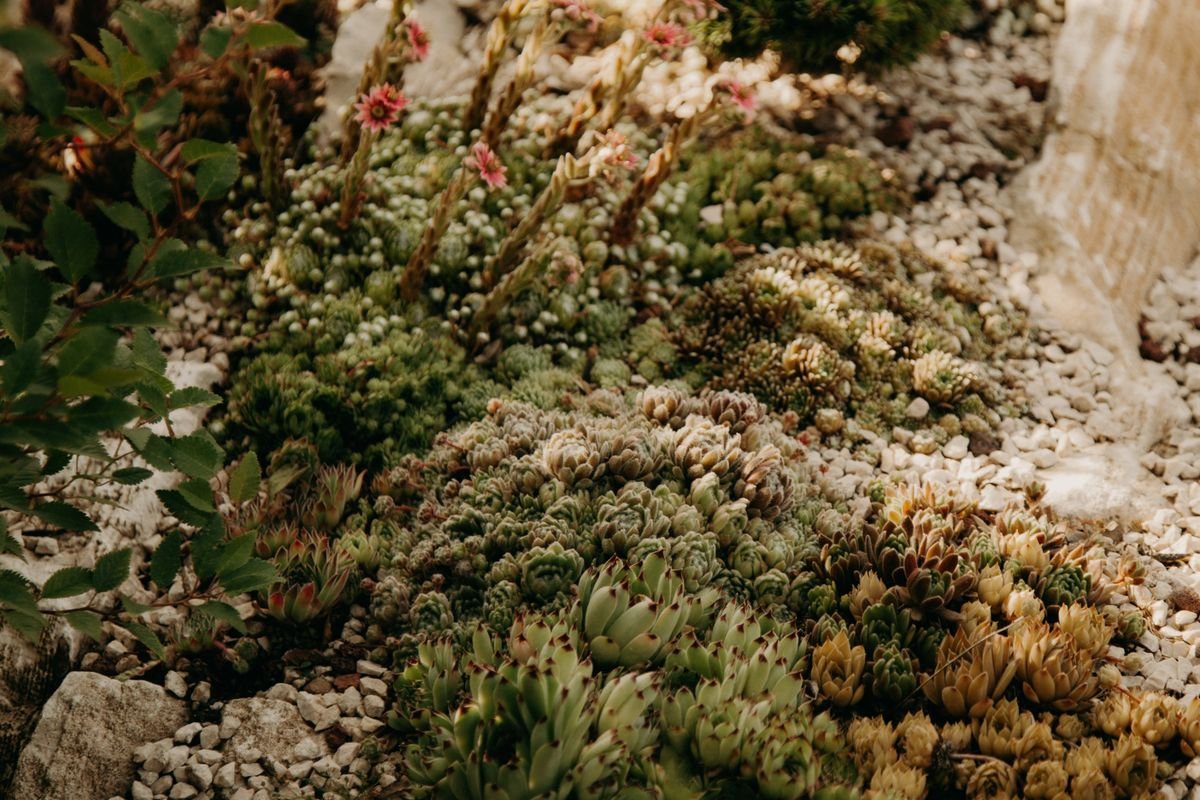
There is an important update from 2013, when Senate Bill 198 added subsection (d-1) to the same law. Under that subsection, an HOA may review a water-conserving plan for aesthetic compatibility, but it may not unreasonably deny approval or unreasonably call the plan aesthetically incompatible. In other words, your HOA can look at your plan and ask sensible questions about it, but “we just do not like the look of it” is not enough on its own. A refusal has to be reasonable, and the yard still has to be judged on its own merits rather than on a blanket dislike of native plants. If you are thinking about a change, it is worth reading our guide to xeriscaping in Lubbock first, so you can picture what a finished low-water yard can look like here on the South Plains.
HB 517 and §202.008: no fines for a brown lawn during watering restrictions
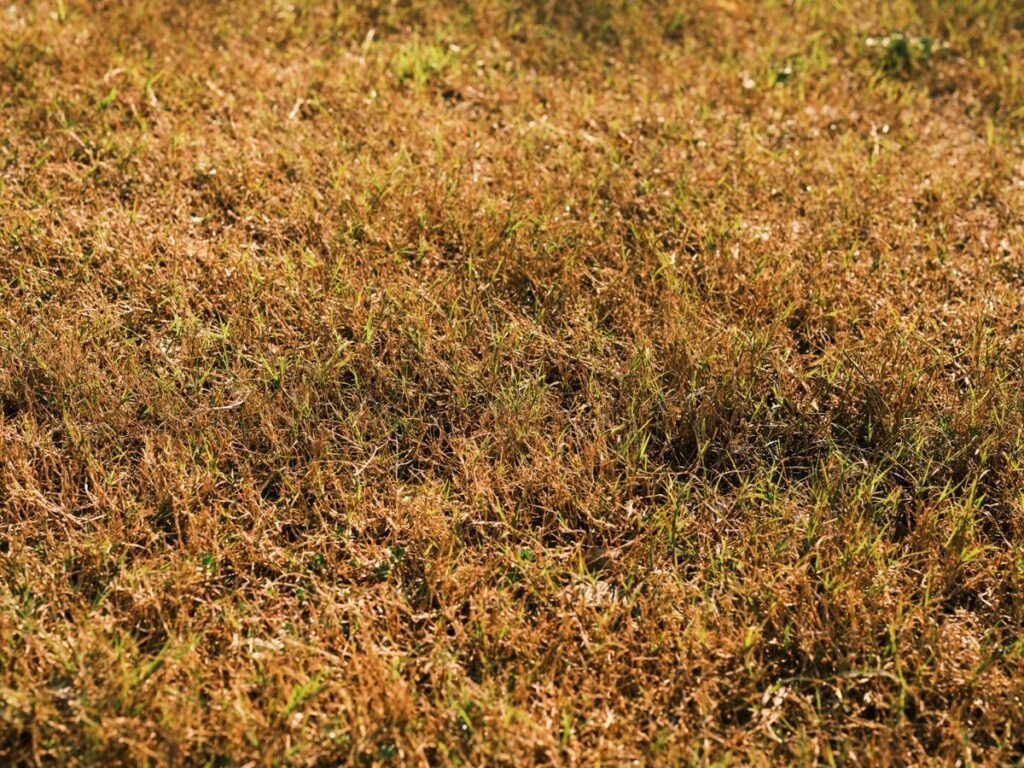
A second, separate law arrived in 2025. House Bill 517, which took effect on September 1, 2025, added Texas Property Code §202.008. Under that law, an HOA may not fine a homeowner for brown or discolored turf or vegetation while the property is under a residential watering restriction — a temporary irrigation limit mandated by a municipality or a water supplier during drought. The protection does not end the moment the restriction lifts, either. It continues until the 60th day after the restriction is lifted, giving grass and plants time to recover once watering can resume.
The same law also bars fines under covenants that require owners to plant or install grass or turf, and HOAs cannot require a specific percentage of turf grass coverage. Lawmakers backed it by wide margins: HB 517 passed the Texas House 143–1 and the Senate 30–0. One point is worth keeping straight. HB 517 did not amend §202.007. The 2003 xeriscaping protection and the 2025 fine protection are two separate laws that do two different jobs: the first stops an HOA from banning water-conserving landscaping, and the second stops it from fining you when drought rules leave your lawn brown.
HB 1432 (2025): a bill that died in committee — it is not law
One 2025 bill would have removed a cost barrier that used to put some homeowners off — but it never became law. HB 1432 was filed in the 2025 Texas Legislature but died in committee and never became law. It gives homeowners no legal protection, so check your HOA’s own rules before assuming a hand-drawn plan will be accepted. You can sketch your beds, mark where each plant will go, list the species you plan to use, and submit that. It does not have to be a professional drawing — a clear hand-drawn plan is a reasonable way to submit — but since HB 1432 never became law, your HOA can still ask for a professional plan if its own rules require one.
What your HOA can still ask for
These laws are strong, but they are not a free pass to let a yard go wild. Your HOA can still require the yard to look maintained rather than abandoned, and it can set reasonable standards for edging, mulch depth and plant spacing. It can also require irrigation while new plantings are getting established, and it may require pre-approval of a plan before you start digging. That is not the same as banning xeriscaping. A neat, edged bed of native plants with fresh mulch is a maintained yard, even if it has no traditional lawn at all. Keeping up with routine lawn care in Lubbock habits — trimming, weeding and keeping beds tidy — goes a long way toward showing that your yard is cared for, not neglected.
What to do if your HOA pushes back
If your HOA questions your plan or sends a fine, take it step by step and keep a paper trail:
- Read your CC&Rs. Find the exact wording about landscaping, lawns and fines, and note the section numbers. You need to know what you are actually being asked to comply with.
- Submit a written plan with a plant list. Sketch your beds, list drought-tolerant native plants by name, and note edging, mulch and spacing. A hand-drawn plan is not guaranteed to be enough — HB 1432 never became law, so your HOA’s own rules decide what it will accept.
- Cite the statute numbers in writing. Refer to Texas Property Code §202.007 for the right to install water-conserving landscaping, §202.008 for protection from brown-lawn fines during watering restrictions, and note that HB 1432, the 2025 bill that would have barred that requirement, died in committee and never became law. Keep your tone polite and factual.
- Keep records. Save copies of your plan, every letter and email, photos of your yard over time, and notes of any phone calls, including dates and who you spoke with. If a watering restriction was in place, keep a note of its dates too.
- Get legal advice if you are fined. If a fine arrives despite the law, or if the HOA keeps denying a reasonable plan, talk to a Texas attorney who handles HOA matters before you pay or agree to anything. This post is general information, not legal advice, and a lawyer can look at your specific CC&Rs and facts.
The Lubbock Angle: HOA Xeriscaping Texas Law and Watering Rules
Lubbock homeowners live with real watering limits, which is exactly why these laws matter here. From October 1 through March 31, you get two assigned watering days per week, based on the last digit of your house number: digits 0, 3, 4 and 9 water on Monday and Thursday; digits 1, 5 and 6 water on Tuesday and Friday; and digits 2, 7 and 8 water on Wednesday and Saturday. There is no irrigation when the temperature is below 35°F, but hand watering is allowed anytime. Those are the rules that can leave a lawn brown in winter — and the same rules that trigger the fine protection in §202.008.
If you are putting in new plants, there is a separate city step worth knowing about. If you plant new sod, overseed, or add trees, shrubs or plants, fill out the City of Lubbock Landscape Variance Form. Once it is approved, you may water for three weeks to establish the new landscape. If you need longer than three weeks, that request must go to the Water Board of Appeals. Our irrigation and sprinkler repair team can also help make sure a system waters only where it should, so a new xeriscape bed gets the water it needs without soaking the sidewalk. And when cold weather arrives, remember to winterize your sprinkler system in Lubbock so a freeze does not undo the work.
A quick word on what xeriscaping actually is
The word itself is newer than many people think. It was coined in 1981 by Nancy Leavitt of Denver Water, from the Greek word xero-, meaning dry. And xeriscaping is not “zeroscaping” — it is not an all-rock yard with few or no plants. A good xeriscape is a planted garden, just one built around plants that suit a dry climate, with mulch, efficient irrigation and soil that holds moisture. Done well, it can cut water use by 60% or more compared with a regular lawn, while still giving you flowers, texture and shade through the seasons. If you have questions about any of this, our frequently asked questions page is a good place to start, or you can reach out through the Landscaping Lubbock home page.
Frequently asked questions
Can my HOA ban xeriscaping in Texas?
No, not as a rule. Under Texas Property Code §202.007, which has been on the books since 2003, an HOA may not include or enforce a provision that prohibits or restricts a homeowner from implementing water-conserving natural landscaping or drought-resistant landscaping. Your HOA may review your plan for aesthetic compatibility, but under subsection (d-1), added in 2013, it may not unreasonably deny approval.
Can my HOA fine me for a brown lawn during watering restrictions?
No, not while a residential watering restriction is in place. Under Texas Property Code §202.008, added by HB 517 and effective September 1, 2025, an HOA may not fine you for brown or discolored turf or vegetation during the restriction, and that protection continues until the 60th day after the restriction lifts. The law also bars fines for not planting grass and stops HOAs from requiring a specific percentage of turf grass coverage.
Can my HOA require a landscape architect?
There is no Texas law stopping it. HB 1432, the 2025 bill that would have barred HOAs from requiring a landscape architect for a native-yard plan, died in committee and never became law — so your HOA’s own rules decide. A hand-drawn plan and a plant list is still a reasonable way to submit for approval, but confirm what your HOA requires first.
Can I water extra for new sod in Lubbock?
Yes — as explained above, a city-approved variance allows three weeks of extra watering for new sod, and longer requests go to the Water Board of Appeals.
This post is general information about Texas law, not legal advice. Laws change, and every HOA and every yard is different, so talk to a Texas attorney if you need advice about your own situation.