Bermuda Grass Fall Care in Lubbock: Fertilizer, Mowing and Watering Before Dormancy
If your Bermuda lawn is starting to look tired in early November, take a breath before you panic — and before you reach for the fertilizer bag. In Lubbock, November is the month Bermuda grass starts shutting down for winter. The green fades, growth slows to almost nothing, and the lawn starts storing energy underground for spring.
Most of what your lawn needs from you now is restraint: the right last mow, less water, and no late feeding. Get those three things right and it will come back thick when the warm weather returns. That is Bermuda grass fall care Lubbock in a nutshell: restraint now, a thick lawn in spring.
What dormancy really looks like in Lubbock
Bermuda is a warm-season grass, which means it only grows properly when it is warm. It starts moving once temperatures climb past about 59 degrees, grows best between roughly 75 and 99 degrees, and goes quiet when the cold arrives. That is why a Lubbock Bermuda lawn turns a pale, strawy brown in winter. Brown is the normal color of a sleeping lawn here, not a dead one. That is why Bermuda grass fall care Lubbock starts with understanding dormancy, not fighting it.
Underground, the plant is tougher than it looks. Bermuda spreads by seed, by runners along the surface, and by rhizomes under the soil, and its roots can run deep when the soil lets them. In Lubbock that last part comes with a catch: our caliche layer stops roots going as deep as they would in soft soil, which is one more reason fall care matters — a lawn going into winter with shallow, stressed roots has less to draw on in spring.
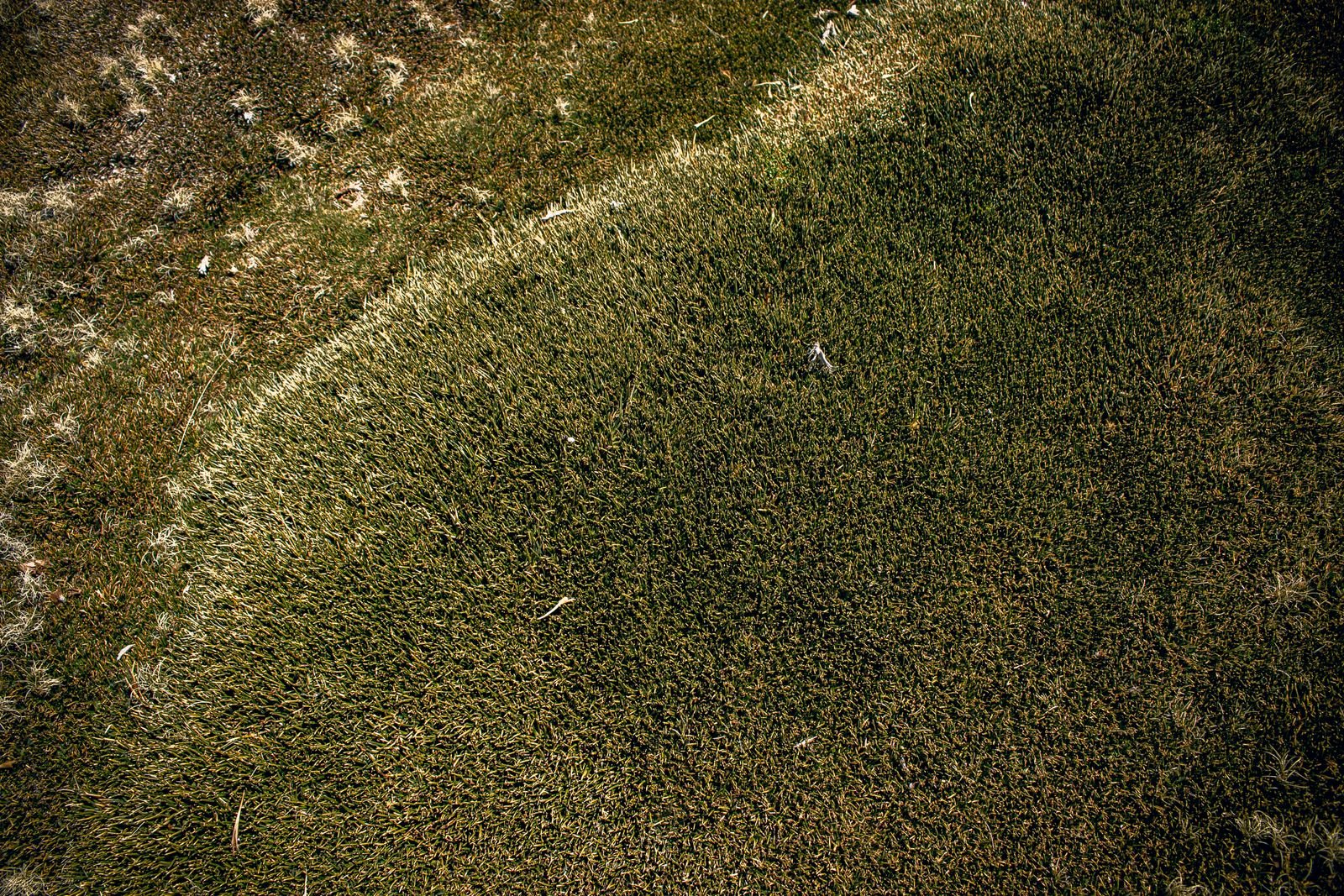
If the first frosts leave your lawn patchy, green in some spots and brown in others, that striped look even has a name among turf people, tiger striping. It is frost damage on the surface, not a disease, and it sorts itself out when growth resumes.
The mistake to avoid is treating a dormant lawn like a sick one. Brown Bermuda in November does not need rescuing. It needs to be left alone to do what it evolved to do.
Fertilizer: the cutoff already passed — and that is fine
Here is the date that matters most this month for Bermuda grass fall care Lubbock. Texas A&M AgriLife Extension puts the last nitrogen application for Lubbock at October 1, a full six weeks before our average first frost. If you fed the lawn in September or early October, you are done for the year. If you did not, do not try to catch up now.
The reason is simple. A freeze forecast is a bad signal for feeding. By the time cold air is actually in the forecast, Bermuda has already slowed down and cannot use fresh nitrogen properly. A heavy dose of nitrogen in November pushes soft, tender leaf growth at exactly the moment the plant should be moving sugars down into its roots and runners. That soft growth is the first thing a frost damages, and wet, cool soil plus fresh nitrogen is also an invitation to large patch, the fungus that loves St. Augustine and Zoysia lawns in cool, damp weather and can trouble Bermuda too.
AgriLife’s guidance is modest even when feeding is still in season: about a pound of actual nitrogen or less per 1,000 square feet per application, and never once the lawn is sliding into dormancy. A soil test can still be useful — if it shows low potassium, a potassium-only product can help cold tolerance without pushing new blades — but for most Lubbock lawns the kindest move in November is to put the spreader away and let the grass rest — that is Bermuda grass fall care Lubbock at its simplest. No bag of “winterizer” will guarantee a thick spring lawn. Waiting until spring is a perfectly sound choice.
Mowing: keep cutting while it grows, then stop — do not scalp it
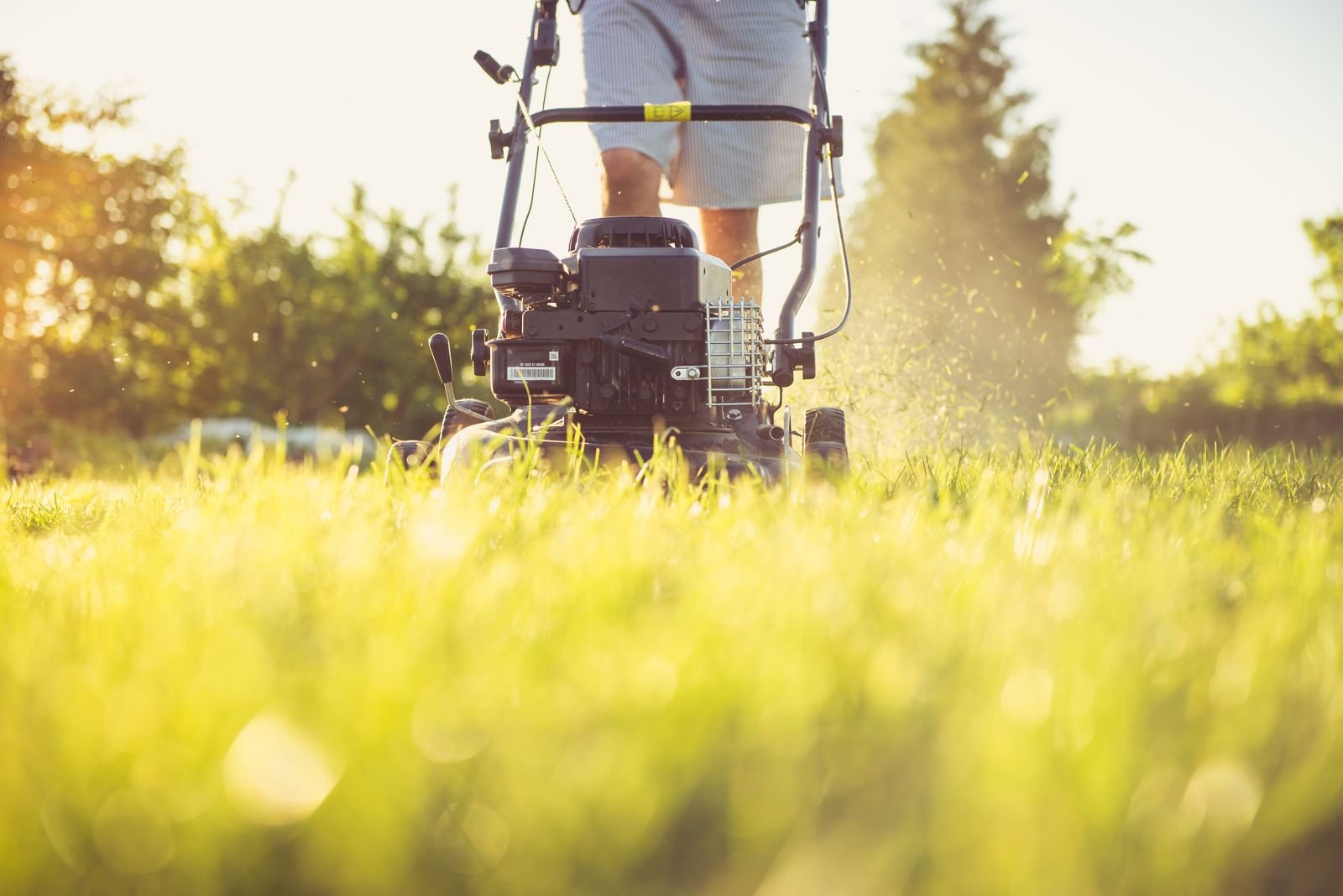
While the grass is still growing, keep mowing on your normal rhythm, then stretch the gaps as growth tapers off. For a home Bermuda lawn in this part of Texas, AgriLife’s home-lawn guidance puts the cutting height at one to two inches. That is the range to stay in through the fall. What you should not do is drop the mower deck for one last super-short cut before winter.
Scalping in November takes away the leaf surface the plant still needs to make energy before dormancy, and it leaves the runners and crowns exposed to cold air and frost. The one-third rule still applies: never take off more than a third of the blade in a single pass. And if you are tempted to scalp now because you heard Bermuda gets scalped in spring, that is a different job for a different season — spring scalping wakes a lawn up, fall scalping sends it into winter weakened. For Bermuda grass fall care Lubbock, the rule is simple: keep the mowing height, skip the scalp.
Leaves deserve the same attention as the mower. Live oaks and pecans around Lubbock can drop leaves well into winter, and a thick blanket of them blocks the sunlight warm-season grass still uses on mild November days. It also traps moisture against the blades, which is exactly the cool, damp condition disease likes. Mulch-mow light leaf cover back into the lawn if you can, and rake or blow off the heavy layers.
Watering: turn the summer schedule off
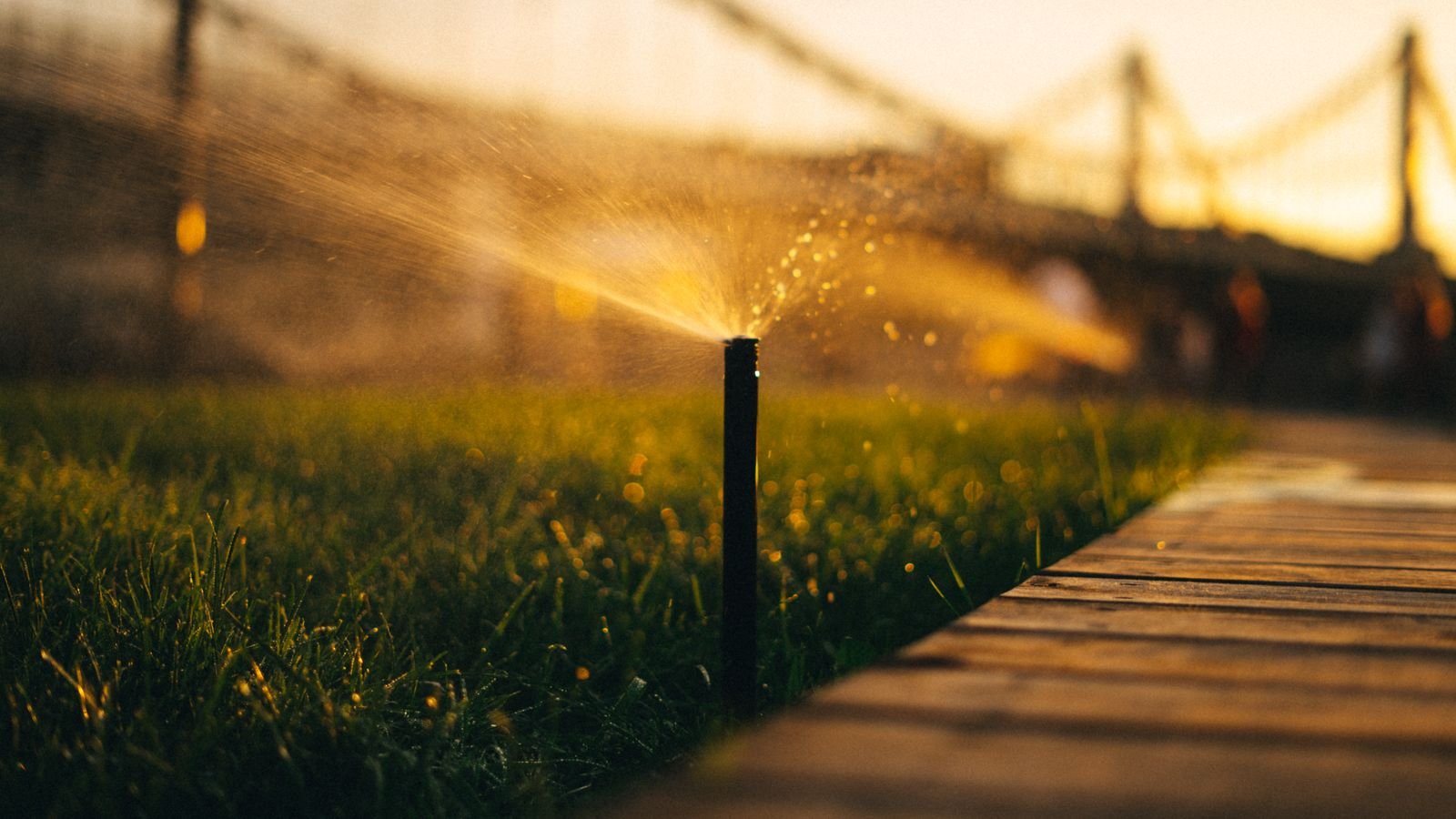
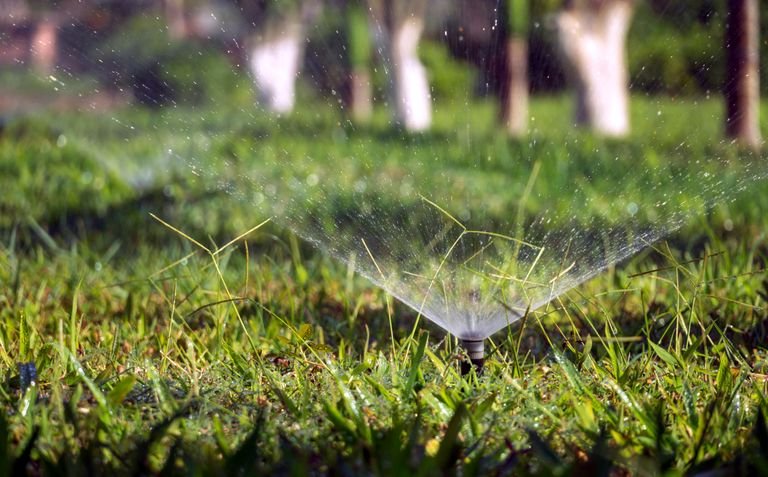
This is the easiest win of the month and the one most people miss. A sprinkler timer still set for July will soak a lawn that barely drinks in November. Cooler days, shorter daylight and slower growth mean far less evaporation, and soggy soil in cool weather is where lawn disease starts.
Lubbock’s own rules make the schedule simple. Irrigation is limited to two assigned days a week all year, based on the last digit of your street address: addresses ending in 0, 3, 4 or 9 water Monday and Thursday; 1, 5 or 6 water Tuesday and Friday; 2, 7 or 8 water Wednesday and Saturday. There is no watering on Sundays.
The fall and winter rules, in force from October 1 through March 31, add the cold-weather piece: on your assigned days, you may only irrigate when the temperature is above 35 degrees. The city’s reason is road safety — water on cold pavement turns to ice. Hand watering is allowed any day, any time.
For a dormant lawn, that is usually plenty. During a dry stretch with no rain, a deep watering every two to three weeks is often enough, and always water early in the morning so the blades dry before the chilly evening air arrives. If your controller still has its summer program in it, change it now — a July program running in November is one of the fastest ways to waste water and stress a lawn that should be easing off. Our guide to watering a lawn in Lubbock has the full day-by-day breakdown, and the winterize guide covers shutting the system down properly before a hard freeze.
What not to do in November
A short list, because the mistakes in Bermuda grass fall care Lubbock are specific. Do not put down Bermuda seed now — the seed needs soil around 65 to 70 degrees to germinate, and Lubbock soil in November is well below that. Seed sown now mostly sits there, and any seedling that does sprout rarely survives its first cold snap. Late spring to early summer is the right window for seeding Bermuda here. Do not feed high-nitrogen fertilizer, as above. Do not water on a summer schedule, and do not water when it is below 35 degrees. And do not assume a brown lawn is a dead lawn — check it in spring before you spend money replacing it.
Dormant or dead? How to tell
If you are staring at a brown lawn and genuinely worried, there is a simple check that costs nothing. Grab a handful of grass and tug gently. Dormant Bermuda holds firm because its roots and runners are alive underground. Dead grass pulls up easily, with no resistance.
A dormant lawn will also green up from the runners outward when consistent warm weather returns in spring — usually once daytime temperatures are regularly back in the 70s. If patches are still bare and lifeless well into May, that is the time to look closer, and it is usually a soil or drainage problem rather than the winter itself. Our caliche soil guide explains why so many Lubbock lawns struggle in exactly those spots.
Bermuda grass fall care Lubbock: the November checklist
Stop fertilizing — the Lubbock cutoff was October 1. Keep mowing at one to two inches while the grass grows, then stop when it stops. Clear leaves so the lawn can still catch the sun. Cut watering back to your two assigned days, never below 35 degrees. Do not seed, do not scalp, and do not panic at the brown. Do those few things — that is Bermuda grass fall care Lubbock in practice — and your Bermuda will spend winter doing what it is supposed to do: resting, storing energy, and getting ready to come back strong.
Frequently asked questions
Is brown Bermuda grass dead in winter?
No — brown is the normal color of a dormant Bermuda lawn in Lubbock, not a dead one. The grass is resting underground and will green up from the runners outward when consistent warm weather returns in spring. If you are worried, tug a handful gently: dormant grass holds firm because its roots and runners are alive, while dead grass pulls up easily.
When is the last day to fertilize Bermuda in Lubbock?
October 1, per Texas A&M AgriLife Extension — a full six weeks before Lubbock’s average first frost. If you fed in September or early October you are done for the year; do not try to catch up in November, because the grass has slowed down and cannot use fresh nitrogen properly.
Can I seed Bermuda grass in November in Lubbock?
No. Bermuda seed needs soil around 65 to 70 degrees to germinate, and Lubbock soil in November is well below that. Seed sown now mostly sits there, and any seedling that sprouts rarely survives its first cold snap. Late spring to early summer is the right window for seeding Bermuda here.
How often should I water dormant Bermuda in Lubbock?
For Bermuda grass fall care Lubbock homeowners, the rule is simple: during a dry stretch with no rain, a deep watering every two to three weeks is often enough. Water only on your two assigned days (by the last digit of your street address), only when the temperature is above 35 degrees, and always early in the morning so the blades dry before the chilly evening air arrives. Hand watering is allowed any day.