
Sprinkler Winterization in Lubbock: Before the First Freeze
Lubbock hasn’t frozen yet this year. The average first freeze here is around November 2, and the latest on record is November 23 — and as of mid-November 2026, the cold still hasn’t arrived. That gap is your window. Once the first hard freeze hits, any water left sitting in your sprinkler lines, valves, or backflow preventer can freeze, expand, and crack something expensive.
Winterizing a sprinkler system isn’t complicated. It is mostly about getting the water out and keeping the cold off the parts that can’t drain. Here’s how to do it right, Lubbock-style.
1. Shut off the water to the system
Find the shut-off valve for your sprinkler system — usually near the backflow preventer or where the line branches off the main. Turn it off. This is the step people skip most often, and it’s the one that matters most: if the supply stays open, the lines stay full.
2. Drain the lines — or blow them out
Open the drain valves and let gravity do what it can. In Lubbock’s flat yards, gravity alone rarely empties every low spot, which is why most pros finish the job with compressed air. A blow-out pushes the remaining water out through the sprinkler heads, zone by zone, starting with the zone farthest from the compressor.
If you do this yourself, keep the air pressure low and never run the compressor with a zone valve closed — that pressure has nowhere to go. If you’re not comfortable with it, this is the one step worth hiring out. A cracked main line costs far more than a blow-out visit.
3. Protect the backflow preventer
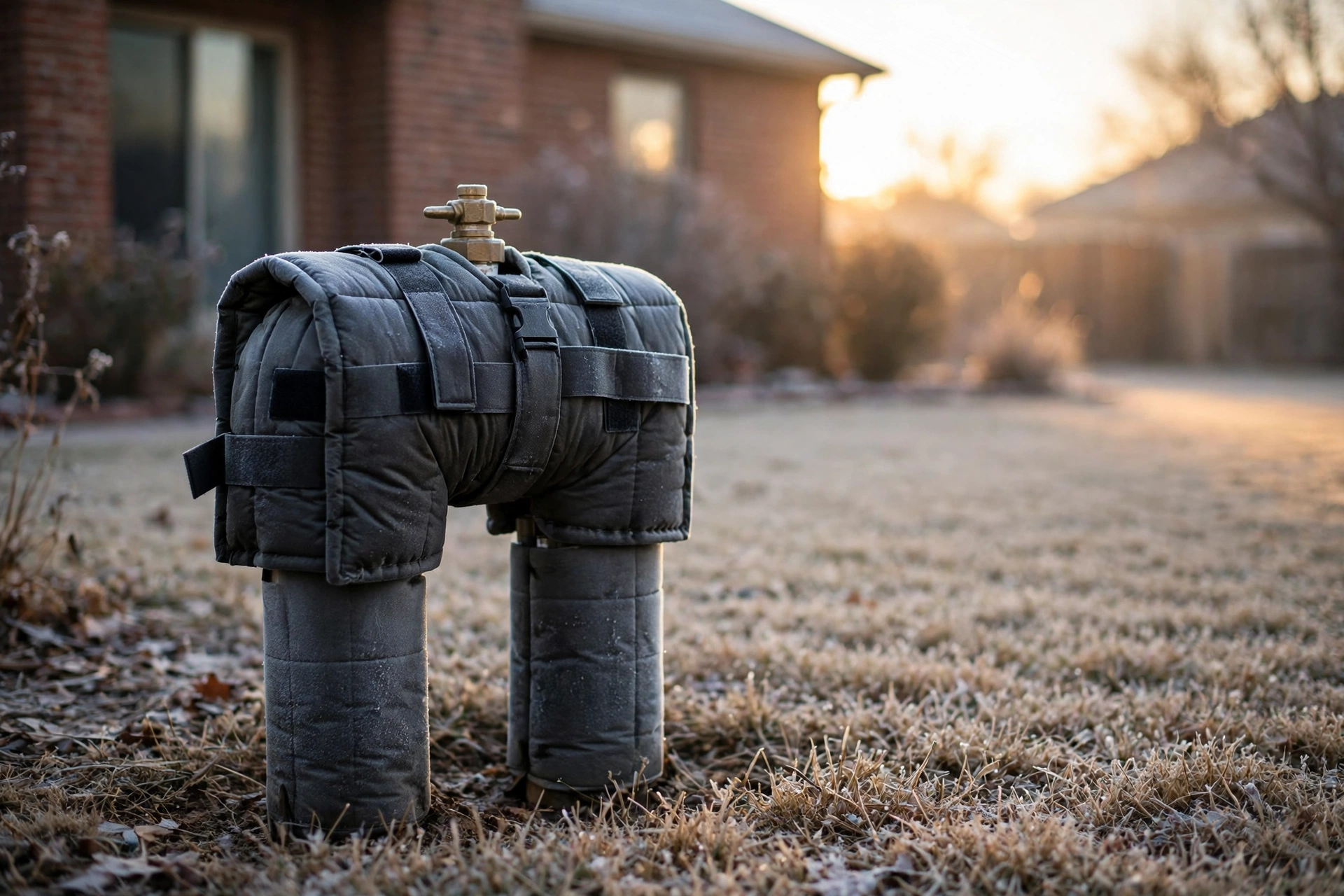
The backflow preventer is the most freeze-sensitive part of the whole system. It’s above ground, it’s full of brass and small seals, and it cracks first. After the water is off and the lines are drained, insulate it: wrap it with an insulated pouch or blanket made for backflow preventers, or at minimum wrap it in towels inside a heavy plastic bag. Don’t leave it bare through a freeze.
4. Turn the controller off
Switch the irrigation controller to off or rain mode for the winter. Leaving it on its summer schedule wastes water on the warm days and can run a zone while a line is still holding water. While you’re there, check the backup battery — a dead battery means a dead schedule next spring.
5. Insulate anything exposed
Any pipe, valve, or fitting sitting above ground gets insulation: foam pipe sleeves, insulation tape, or even old towels in a pinch. Pay special attention to pipes on the north side of the house and anything in an unheated garage.
6. Mark the heads before the yard goes dormant
Winter is when heads get stepped on, run over, or buried under leaves. A quick walk-through with small flags on each head saves you a spring of hunting for a crushed rotor.
What happens if you skip it?
A frozen line doesn’t always announce itself. Sometimes the crack is underground and you only find it in March, when the system pressurizes and a zone turns into a swamp. A cracked backflow preventer is worse — it can leak constantly and, in the worst case, let contaminated water flow back toward the house supply. That’s why the city requires the device in the first place, and why a broken one is a repair you can’t put off.
We covered the short version of winter shutdown as mistake #4 in our 7 West Texas landscaping mistakes post. This is the full version.
When should you do it?
Before the first hard freeze — not after the forecast, before it. In Lubbock, the first freeze usually lands in early November, but 2026 is running late. The forecast low around November 24 is in the mid-30s, which is close enough to freezing that exposed water is at risk. If your system is still running on its summer schedule, this week is the week to winterize.
FAQs
Do I need to winterize my sprinkler system in Lubbock?
Yes. Lubbock freezes every winter, and any water left in above-ground parts or shallow lines can crack them. The cost of winterizing is a fraction of the cost of replacing a backflow preventer or a cracked main line.
Can I just turn the controller off and skip the blow-out?
Turning the controller off stops the watering, but it doesn’t remove the water already sitting in the lines. Draining — or better, blowing the lines out — is what actually protects the pipes.
What temperature damages a sprinkler system?
Water starts freezing at 32°F, and damage happens when water trapped in a pipe or device freezes and expands. Exposed parts like the backflow preventer are at risk on the first night the temperature drops to freezing, especially if it stays there for several hours.
Should I hire someone to winterize my sprinklers?
If your system has a backflow preventer and multiple zones — most Lubbock systems do — a professional blow-out is the safest option. If you do it yourself, keep air pressure low, work zone by zone, and never run the compressor against a closed valve.


One Comment