
Caliche Soil in Lubbock: What It Is & How to Work With It
Caliche soil Lubbock: every Lubbock homeowner seems to have the same story. You pick a Saturday morning, grab a shovel, and start digging a hole for a new tree or a fence post. Six inches down, the digging is fine. A foot down, the shovel rings off something hard and white — clang — and stops dead. You scrape at it, you jump on the shovel, you try a pick. Nothing. Welcome to caliche, the hidden layer under most Lubbock yards. If you have hit it, you are not doing anything wrong. You are just digging in West Texas. This guide explains what caliche is, why Lubbock has so much of it, what it does to lawns and trees, and — most importantly — what actually works against it. For regional guidance, see the City of Lubbock website.
Caliche soil Lubbock: what it actually is
Caliche (pronounced kuh-LEE-chee) is not a rock somebody hauled in, and it is not a boulder left behind by a glacier. It is your own soil, cemented into a hard layer by calcium carbonate — the same mineral that makes up chalk and limestone. Over thousands of years, rainwater trickles down through the soil carrying dissolved calcium carbonate. In a dry climate, the water evaporates or gets used up by plants before it can wash those minerals away, so the carbonate is left behind. Bit by bit, it glues the gravel, sand, clay and silt together into a pale, crusty layer that can be inches or feet thick. Soil scientists sometimes call this hard layer the K horizon.
The word itself gives the game away. Caliche comes from Spanish, from the Latin calx, meaning lime. It is also called calcrete, and in South Asia the same kind of deposit is known as kankar. Whatever you call it, the result is the same: a hardpan that behaves a lot like weak concrete.
Caliche forms in arid and semiarid regions — places where annual precipitation is under about 65 cm (26 inches) and the mean annual temperature is above 5°C (41°F). That description covers much of the American Southwest, including the High Plains of West Texas. In fact, the Pliocene–Pleistocene caprock of the Llano Estacado of Texas is calcrete: the whole tableland is capped by the stuff.
Caliche soil Lubbock: why it is so bad here
Lubbock sits in the middle of the Llano Estacado, a flat tableland of around 32,000 square miles — and Lubbock is the largest city on it. The region gets under 23 inches of rain a year, and Lubbock itself averages just 18.33 inches (466 mm) a year, according to NOAA’s 1991–2020 normals. That puts us squarely in caliche-forming territory.
Here is the part that matters for your shovel: the depth of the caliche layer tracks rainfall. In a place that gets about 35 cm (around 14 inches) of rain a year, the layer can sit as shallow as 25 cm — about 10 inches — below the surface. Where rainfall is around 75 cm (about 30 inches), the same layer sits roughly 125 cm (about 49 inches) deep. Lubbock’s 18 inches puts us near the shallow end of that range, which is why so many homeowners strike white rock a foot down. In a wetter part of Texas, the same layer might be four feet down and never bother anyone. Here, it is right where your tree roots want to be.
How to tell it’s caliche in your yard
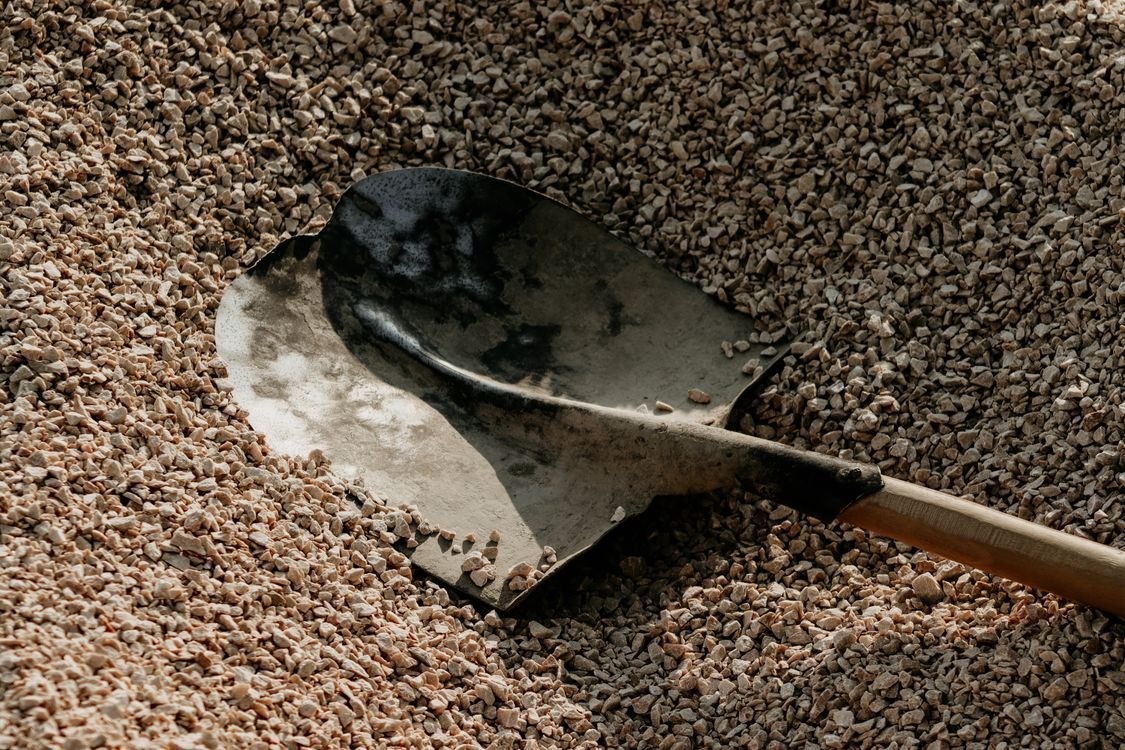
You do not need a lab test to suspect caliche — your eyes and your shovel will tell you. Look for a pale, almost white or cream-colored layer a foot or so down, with chalky chunks that crumble into powder when you rub them hard but refuse to budge under a shovel. The surface can develop a white crust, especially in bare spots. The shovel test is the classic one: the blade bites into the topsoil, then rings or skids on a hard layer and goes no deeper. These are the first signs of caliche soil Lubbock homeowners usually notice.

The water tells on it too. After a rain or a long watering session, puddles linger on a caliche yard long after the neighbors’ yards have drained — then a few days later the same ground is bone-dry and cracked on top. Meanwhile your plants give you the other clue: grass and shrubs that yellow despite watering and feeding, and trees that never seem to get established. If that is your yard, you have almost certainly got caliche. When puddles linger like this, caliche soil Lubbock is the usual reason.
What caliche soil Lubbock does to your yard
A caliche layer causes trouble in several ways at once. Because it is effectively impermeable, it stops water draining down through the soil. Water sits above it, roots sit in it, and roots starved of oxygen drown. Then the water evaporates, and salts that would normally wash away are left behind to build up — while the soil turns basic, or alkaline. That is why caliche soil Lubbock gardeners plan around the layer instead of fighting it head-on.
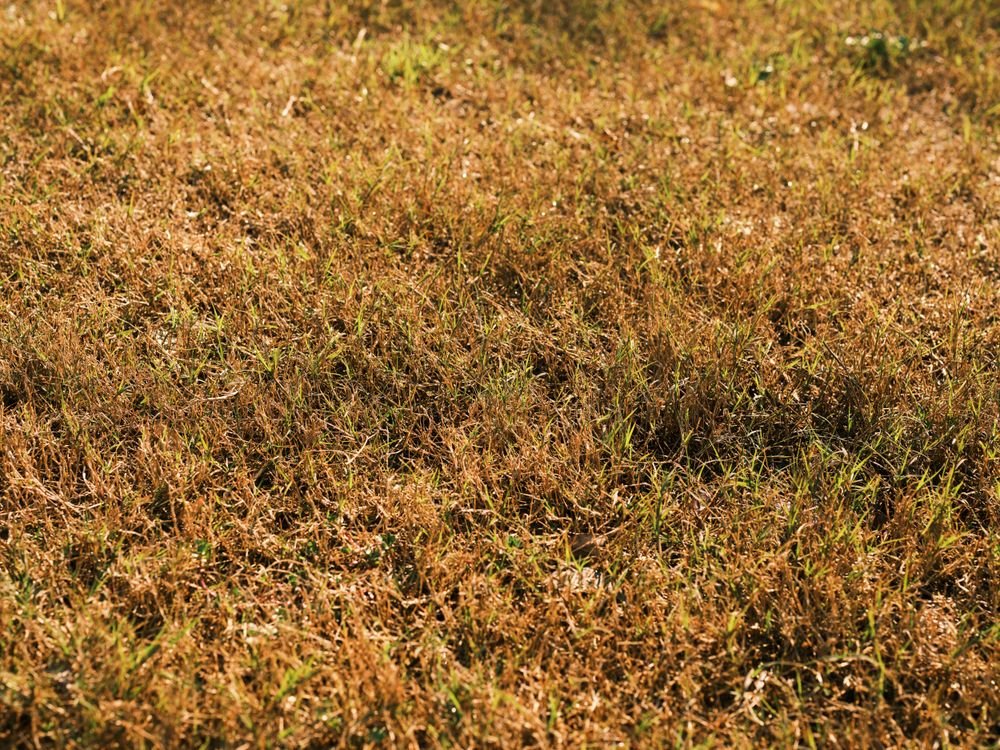
That alkalinity is where the yellowing comes from. The calcium carbonate in caliche can block plants from taking up nutrients, especially iron. The classic sign is iron chlorosis: the youngest leaves turn yellow while the veins stay green. Throwing more general fertilizer at those yellow leaves will not fix it — the iron is in the soil, the plant just cannot get to it in that high-pH environment.
There are two other costs. Tree roots cannot grow down through the layer, so they spread sideways near the surface — trees anchor poorly, and a big West Texas wind can push over a young tree that never got a proper footing. And then there is the simple misery of digging: fence posts, planting holes and irrigation lines all take far longer when you are chiselling through a chalky hardpan. That is why so much of lawn care in Lubbock is really caliche management, and why new trees so often struggle in their first years. If a specimen keeps failing, it is worth talking to a tree and shrub service before you replace it with another one.
What actually works
Start with a soil test. Before you spend a dollar on amendments, send a sample to the Texas A&M AgriLife Extension soil testing lab and find out your pH and nutrient levels. Guessing wastes money; a test tells you exactly what you are dealing with. A soil test is the fastest way to confirm caliche soil Lubbock in your own yard before you spend anything.
Aeration helps more than most people expect. Punching holes through the topsoil and into the top of the caliche gives water and air a way in, and it helps compost and other organic matter work down into the ground instead of sitting on top. If you have not aerated in a while, start there — here is a fuller guide to aerating and fertilizing a Lubbock lawn.
Compost and organic matter are your long game. They will not dissolve a caliche layer, but they build a deeper layer of living topsoil above it, improve drainage, and feed the soil life that slowly improves structure. Work compost into planting beds every season.
Texas A&M AgriLife Extension has specific guidance for the iron deficiency that caliche causes. AgriLife’s Dr. Calvin Trostle in Lubbock notes that caliche and alkaline soils on the High Plains are prone to iron deficiency — and he is blunt that trying to lower soil pH across a whole yard is likely not feasible. Where the pH is over about 7.5, though, mixing elemental sulfur at about 1 lb per 100 square feet to about 6 inches deep can help iron availability. Read that as AgriLife’s guidance for tackling iron deficiency, not a blanket recommendation to acidify your whole yard — and get your soil test first.
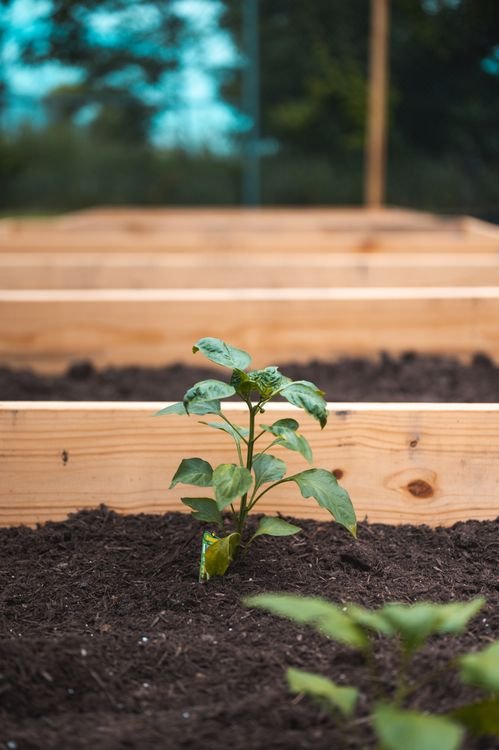
For planting, the smart move is often to go through it or around it. Break through thin caliche with a pick or a digging bar in a planting hole, or dig a wide planting pocket and backfill with good soil so roots have somewhere to go. Better still, build up instead of digging down: raised beds filled with imported soil let you grow vegetables, flowers and shrubs without fighting the hardpan at all.
And choose plants that do not mind alkaline soil. Desert willow, native grasses and other xeriscape plants evolved for exactly these conditions — pick low-water landscaping ideas for a Lubbock yard and design a landscape that works with the soil rather than against it.
Finally, water smart. Drip irrigation delivers water slowly, right at the roots, so it soaks in instead of pooling on the hard layer — and if your sprinkler system is part of the problem, getting it repaired matters just as much. That is where irrigation and sprinkler repair comes in. And keep up with routine lawn care: regular mowing and feeding keep Bermuda strong enough to cope with the stress. Watering this way suits caliche soil Lubbock yards because it keeps moisture where roots can reach it.
What doesn’t work
A few approaches sound sensible and waste your money. Pouring more fertilizer on yellow leaves does not supply iron a plant cannot absorb. Rototilling caliche until it is dust does not remove it — it just mixes powdered lime through your topsoil and pushes the pH higher. Planting acid-lovers such as azaleas, blueberries or gardenias in untreated caliche soil is a slow way to watch an expensive shrub die. And do not expect a one-weekend fix: caliche formed over thousands of years, and the honest fixes — compost, aeration, raised beds — pay off over seasons, not days.
When to call a pro
Some caliche problems are bigger than a shovel. Standing water that will not drain, a yard that slopes toward the house, trees that keep failing, or any planting job bigger than a couple of holes — that is when a professional crew earns its keep. Our team deals with Lubbock’s caliche every day, from grading and drainage work to planting design and full landscape builds. For jobs like these, caliche soil Lubbock homeowners call in a pro with the right equipment.
If you would like an idea of what a fix might cost, try our landscaping cost calculator, or simply contact us and tell us what you are seeing in your yard. We will tell you honestly whether it is a Saturday job or one worth hiring out.
Frequently Asked Questions
Is caliche the same as limestone?
They are cousins, not twins. Both are mostly calcium carbonate, and true limestone is a rock, usually formed from ancient marine sediments. Caliche is soil that has been cemented in place by calcium carbonate over thousands of years. It looks chalky and pale like limestone, and it can be just as hard to dig, but it is a soil layer rather than a rock formation.
Can you remove caliche?
In a single planting hole, yes. You can chip through a thin layer with a pick or digging bar, or dig it out and backfill with good soil. Across a whole yard, though, removing caliche is usually impractical and expensive. Most homeowners get better results working with it: aerate, add compost, build raised beds, and choose plants that tolerate alkaline soil.
Does caliche hurt Bermuda grass?
It can. Bermuda is the standard warm-season lawn grass in Lubbock, but caliche still makes life hard for it: the hard layer keeps roots shallow, water pools instead of soaking in, and the high pH can lock up iron, leaving yellow patches even when you are feeding and watering. Regular aeration, topdressing with compost, and addressing iron deficiency are the most useful responses.
The white rock under your lawn is not going anywhere — but with a soil test, a little compost, the right plants and a plan to work around it (or through it), you can still have a yard you are proud of. Caliche is a Lubbock fact of life. It just does not have to be a life sentence for your landscape.




2 Comments