

Low-Water Landscaping Ideas for West Texas Yards
Low-water landscaping ideas work best when they start with the yard you already have, not a catalogue photo. In Lubbock, that means rock and mulch where grass struggles, native plants that handle heat and wind, and drip lines that put water at the roots instead of spraying it into the air.
A few swaps make the biggest difference. Trade a thirsty strip of lawn by the driveway for decomposed granite with a couple of yucca or red yucca. Put mulch beds around trees instead of grass that fights the roots for water. Keep a smaller patch of Bermuda where the kids actually play, and let the rest of the yard go low-water. A rain barrel under a downspout is a small thing, but it is free water for the beds. Together, these swaps are low-water landscaping ideas that cut water use without making the yard look bare.
None of this has to happen all at once. Most of our xeriscape jobs start with one bed or one side of the yard, then grow from there as the water bill drops. The mistake is planting desert plants in unamended caliche and hoping for the best – work in compost, give new plants a real watering schedule for the first season, then back off. Call (806) 419-6465 and we will walk the yard with you and give you a free estimate.
Low-Water Landscaping Ideas: Start With a Smaller Lawn
The biggest water saver in any West Texas yard is a smaller lawn. Most families only use part of their grass: the patch where the kids play, the strip by the patio, maybe the front lawn that faces the street. The rest is often just there because it always has been, and it is the part that drinks the most water in July. Cutting the lawn down to the area you actually use, and replacing the rest with gravel, mulch, or native planting, can cut watering by a third or more without the yard looking bare. Keep the Bermuda where it earns its keep, and let the rest go low-water. If you are deciding which grass to keep, our comparison of Bermuda vs buffalo grass in Lubbock is a good place to start, since buffalo grass needs noticeably less water and mowing than Bermuda.
What replaces the lawn matters, too. Decomposed granite and gravel look right in a West Texas yard, they do not need watering, and they keep weeds down if they are laid over a good weed barrier. Mulch beds around trees do two jobs at once: they keep moisture in the soil and they stop grass from fighting the tree roots for water. A few large rocks, a dry creek bed of river rock where water naturally runs, and a path of flagstone or pavers can give a yard structure without a single extra gallon of water. The trick is to make it look planned rather than stripped: group plants together, repeat a few shapes and materials, and leave enough open space that the yard still feels like a yard.
Low-Water Landscaping Ideas: Plants That Handle Heat and Caliche
Native and adapted plants are the backbone of a low-water yard in Lubbock, because they evolved for this climate rather than in spite of it. Red yucca, yucca, and agave give a yard shape all year and need almost no water once they are established. Ornamental grasses like blue grama and sideoats grama move in the wind and turn a lovely gold in fall. For color, lantana, salvia, and desert marigold bloom through the heat, and they bring in butterflies and bees while they are at it. Trees are worth choosing carefully: desert willow, mesquite, and redbud handle our heat and alkaline soil, and a well-placed shade tree cuts the water needs of everything growing underneath it. Our Lubbock landscaping work leans on these plants for a reason: they look like they belong here, because they do.
Low-Water Landscaping Ideas: Water Less and Water Smarter
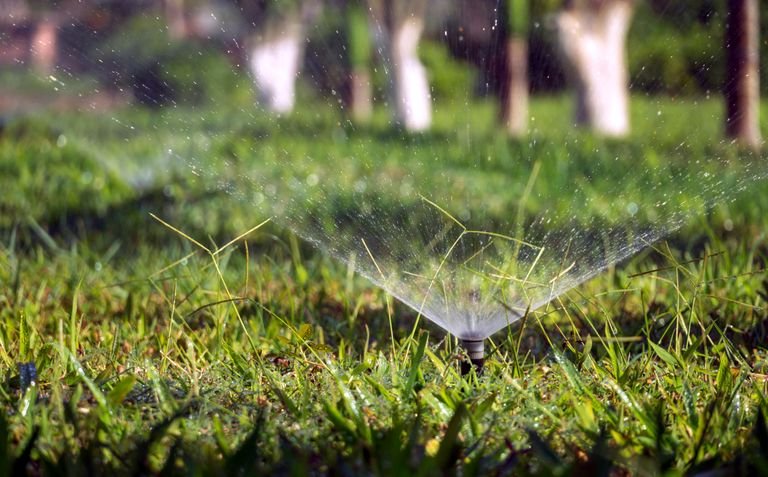
A low-water yard still needs water, just less of it and in the right places. Drip irrigation is the best fit for beds, because it puts water at the base of each plant instead of spraying it into the wind, and it can be set to run early in the morning when evaporation is lowest. Group plants by how much water they need, so the thirsty ones are together near the house and the tough natives are on their own zone, or on no zone at all once they are established. That grouping, sometimes called hydrozoning, stops the common problem of overwatering the natives to keep the lawn happy, or underwatering the lawn to keep the natives happy. Our guide to how often to water a lawn in Lubbock covers the timing for the grass, and the same early-morning, deep-watering habit works for beds too.
New plants need more water than established ones, whatever the label says, so plan on watering a new native planting regularly for its first season and then easing off. After that, a deep watering every couple of weeks in summer is usually enough for most drought-tough plants, and many will get by on rainfall alone in a mild year. If the beds are on an irrigation system, a seasonal check is worth doing, because a drip line that has clogged or a spray head that is watering the sidewalk will quietly undo all the savings. A little mulch, two or three inches of bark or gravel around the plants, also goes a long way, keeping the soil cool and the moisture in. For regional water-saving guidance, see the City of Lubbock website.
Making the change in stages
Going low-water does not have to mean ripping out the whole yard at once. Start with one bed or one side of the house, see how it looks through a summer, and then do the next part. That is how most of our low-water landscaping jobs in Lubbock begin, and it keeps the cost and the disruption manageable. The same approach works in the surrounding towns, where bigger lots make the savings even larger, from a xeriscape bed in Shallowater to a low-water front yard in Idalou. Done in stages, a yard can go from thirsty to thrifty without ever looking unfinished. That is how low-water landscaping ideas turn a thirsty yard thrifty, one bed at a time.




2 Comments