Overseed Bermuda Grass in Lubbock: Winter Rye Guide
Quick answer: Yes — overseed Bermuda grass Lubbock lawns now if you want a green lawn in Lubbock this winter. Fall 2026 has brought no freeze yet, and the forecast still looks workable, but the window is closing fast. Sow annual ryegrass at about 10 to 12 pounds per 1,000 square feet, keep the seed lightly moist until it sprouts, and do not add nitrogen now, because the last nitrogen date for Lubbock, October 1, has already passed.
Every November, Lubbock lawns face the same trade-off. Bermuda grass, the warm-season grass most of us grow here, starts to fade and turn brown as the weather cools, and it will stay dormant through winter. That is normal, and it is not a sign that the lawn has died. If a brown lawn all winter bothers you, overseeding with ryegrass is the usual way around it. You are not replacing your Bermuda. You are borrowing a cool-season grass for the cold months, then letting the Bermuda take over again in spring.
Why This November Is Different
Timing matters more than usual this year, because the weather has not followed the usual pattern. Lubbock’s average first frost is November 2, based on the NOAA 1991-2020 normals, yet fall 2026 has had no freeze yet. The lowest temperature from November 1 to 7 was 37 degrees on November 6. The National Weather Service Lubbock discussion on November 7 gave only a 6 percent chance of a freeze before November 23, the record date for the latest first freeze, and forecast lows of 41 to 49 degrees through November 19.
Put plainly, the ryegrass overseeding window is still open, but it will not stay open for long. A single hard freeze can change the picture quickly, and seed that is still trying to get established is more vulnerable than seed that is already up and growing.
If you have been putting this off, this is the week to decide. Waiting another two or three weeks is not the same as waiting a few days, and by then the safe part of the season may be gone. That is also why this guide sticks to the timing and rates that Texas A&M AgriLife Extension and Clemson Extension actually publish, rather than guessing at a later date.
What Overseeding Is
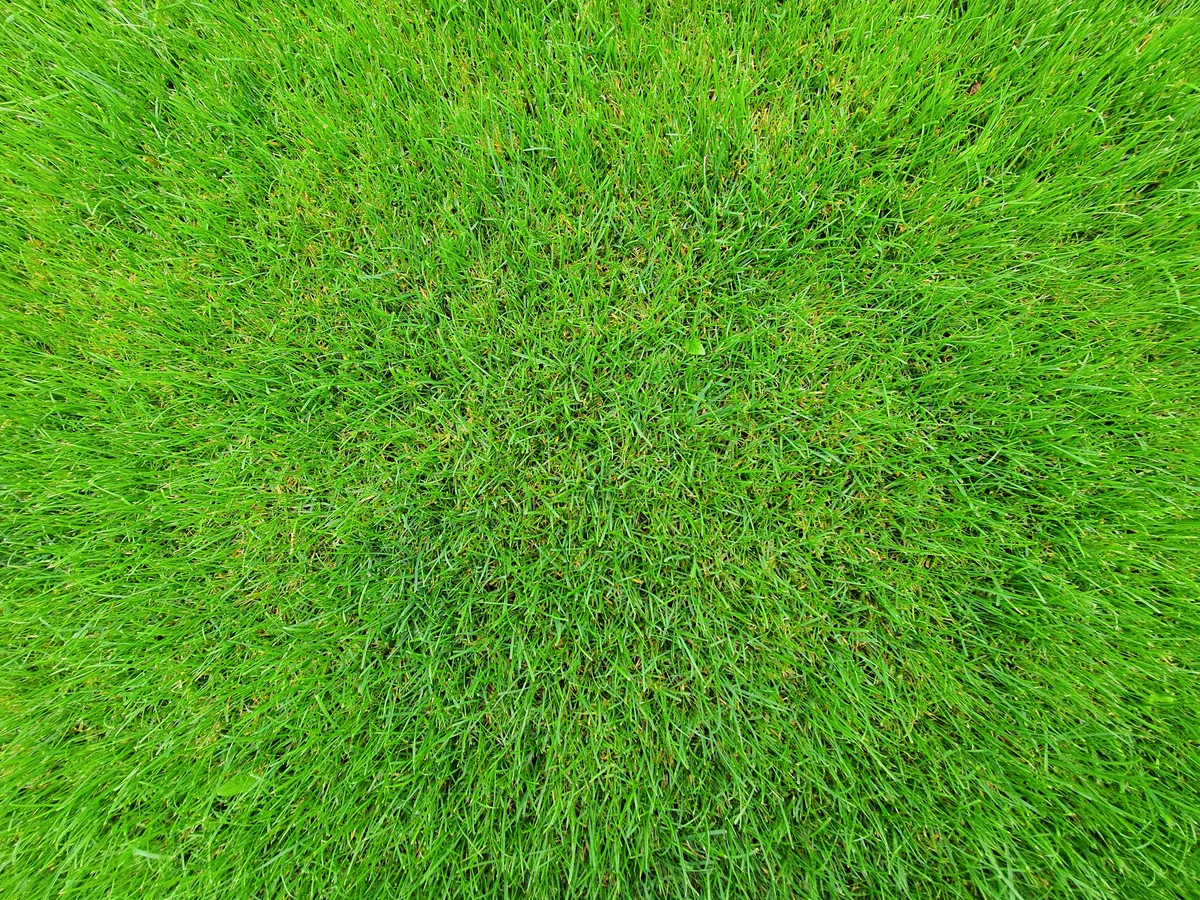
Overseeding means spreading seed over a lawn that is already there, so the new grass grows in among the old grass. In Lubbock, that usually means spreading ryegrass seed over dormant or fading Bermuda. The ryegrass comes up green and stays green through the cool months, while the Bermuda rests underneath. Come spring, the ryegrass fades as the weather warms, and the Bermuda wakes up and fills back in.
Photo by Adrian Vieriu, via Pexels.
Bermuda grass, Cynodon dactylon, is a warm-season grass. It starts growing above 59 degrees, grows best at 75 to 99 degrees, and goes dormant and brown in winter. Annual ryegrass, Lolium multiflorum, is a cool-season grass that is used as a winter cover. That contrast is the whole idea: one grass for summer, one for winter, in the same lawn, at different times of year. Overseeding does not fix a thin lawn in summer, and it will not make Bermuda grow in cold weather. It is a seasonal cover, and it works best when you treat it that way.
It is also worth knowing what not to overseed. Clemson Extension is clear on this point: overseed Bermuda only, never St. Augustine, centipede, or zoysia. If you are not sure which grass you have, check before you buy seed. Most Lubbock lawns in this situation are Bermuda, and our Bermuda grass fall care guide for Lubbock explains how Bermuda behaves as it heads into dormancy.
Annual vs Perennial Ryegrass
For most Lubbock homeowners, annual ryegrass is the sensible choice, and it is the one Texas A&M AgriLife Extension points to for a home lawn. Annual ryegrass is the fastest to germinate and the cheapest of the two, which matters when you are buying seed for a whole lawn and you only need it for one winter. It comes up quickly, gives you a good green cover, and then it is gone when warm weather returns, which makes the spring changeover simpler.
Perennial ryegrass is also used for overseeding, and it can look very good, but it is usually more expensive and it can hang on longer into spring. That sounds like a benefit, and in a mild year it can be, but it can also compete with your Bermuda for longer just as the Bermuda is trying to wake up. For a first overseeding job, or for a lawn you want to keep simple, annual ryegrass is the easier path. Buy fresh seed from a local supplier if you can, check that the bag is labelled annual ryegrass, and keep it dry until you are ready to spread it.
When to Overseed Bermuda Grass Lubbock
Texas A&M AgriLife Extension says the best time to overseed a home lawn is mid-to-late October and early November, and more accurately, after the first frost, once Bermuda starts going off color. Clemson Extension gives a similar frame from the other direction: overseed about 30 days before the first frost, when daytime highs are near 70 degrees and nights stay above 50 degrees. In a normal Lubbock year, those two pieces of advice line up neatly. You seed in late October, the Bermuda is fading, the weather is still mild enough for ryegrass to sprout, and winter arrives after the new grass is up.
This year, though, the frost cue has not arrived on schedule. That does not mean you should wait until a freeze finally shows up, because by then the mild-weather part of the window may be closing. It means you should use the calendar, the forecast, and the look of your own lawn together. If your Bermuda is going off color, daytime highs are near 70, nights are staying above 50, and the forecast shows lows in the 40s for the next week or so, you are in the right kind of weather to overseed Bermuda grass Lubbock lawns. If a freeze is forecast in the next few days, wait for it to pass. Seed that is just sprouting does not need a hard freeze on top of it.
If you are choosing between Bermuda and another warm-season grass for a new lawn, our Bermuda vs Buffalo grass comparison for Lubbock is a useful read, because the two grasses behave differently in winter and in drought. For overseeding, though, the rule stays simple: this is a Bermuda lawn job.
How Much Seed
Seed rate is where a lot of overseeding jobs go wrong, usually because people spread too little and end up with a thin, patchy green that never really covers the brown Bermuda underneath. Texas A&M AgriLife Extension recommends sowing about 10 to 12 pounds of annual ryegrass per 1,000 square feet for a dense stand. Clemson Extension gives a range of 5 to 12 pounds per 1,000 square feet, so the top end of that range is where you want to be if you want a full, even lawn rather than a light dusting.
Measure your lawn before you buy, even roughly. A front lawn that is 2,000 square feet needs about 20 to 24 pounds at that rate, and a 5,000-square-foot lawn needs about 50 to 60 pounds. It helps to split the seed in half and spread half in one direction and half at right angles to it, so you do not miss strips. A spreader makes this much easier than scattering by hand, and it is worth borrowing or renting one if you do not own one. Keep the seed rate the same whether you are seeding the whole lawn or just the parts you see most. A light rate in the back and a heavy rate in the front will show all winter.
How to Overseed Bermuda Grass Lubbock, Step by Step
Start by mowing your Bermuda short, shorter than you would mow it in summer, and bag or rake up the clippings so the seed can reach the soil. Next, rake the lawn lightly to loosen the surface and clear away leaves and thatch. Seed sitting on top of a thick mat of dead grass will struggle to make soil contact, and soil contact is what germination depends on. If your lawn is compacted, aerating first can help, and our guide to aerating and fertilizing your Lubbock lawn explains when that job makes sense.
Spread the seed evenly with a spreader, in two passes at right angles, at about 10 to 12 pounds per 1,000 square feet. Then rake very lightly, just enough to settle the seed into the top of the soil, or roll the lawn if you have a roller. Do not bury the seed deep. A light topdressing of compost can help hold moisture, but it is not required, and a thick layer will do more harm than good. Water right away, lightly, so the seed and the top of the soil are damp but not puddled.
For the next week or two, the job is mostly watering. Texas A&M AgriLife Extension advises watering lightly a couple of times a day until the seed germinates, and warns that too much water rots the seed. That is a useful balance to keep in mind: the seed needs to stay damp, not soaked. Short, light watering is better than one long soak that leaves the lawn soggy. Once the ryegrass is up and growing, you can cut back to a normal winter watering pattern, and mow the rye at 2 to 2.5 inches.
What NOT to Do
First, do not fertilize with nitrogen now. Texas A&M lawn fertilizer guidance puts the last nitrogen application for Lubbock at October 1, and that date has passed. Adding nitrogen in November pushes soft, tender growth at the wrong time of year, and it will not help the ryegrass get established. Save the fertilizer for spring, when the Bermuda is ready to grow again.
Second, do not overseed a grass that should not be overseeded. As noted above, this is a Bermuda-only job. Do not spread ryegrass over St. Augustine, centipede, or zoysia and expect the same result.
Third, do not use a weed-and-feed or a pre-emergent herbicide around seeding time unless the label clearly allows it, because many of those products will stop grass seed from sprouting just as surely as they stop weed seed. Fourth, do not drown the seed. If water is standing on the lawn, you are watering too much. And finally, do not expect the ryegrass to look like a summer Bermuda lawn. It will look different, softer and a lighter green, and that is fine. It is a winter lawn, not a summer one.
Winter Watering in Lubbock
Ryegrass needs water through winter, but Lubbock watering is not unlimited. The city restricts watering to two assigned days per week by address, with no watering on Sundays, so plan your overseeding around the days you are allowed to water. That matters most in the first two weeks, when the seed needs light watering a couple of times a day. If your assigned days do not line up with the day you want to seed, seed on a day when you can water, and keep the lawn damp on your watering days after that.
Our guide to watering a lawn in Lubbock covers the local rules and how to water efficiently here. In winter, water in the morning when you can, so the grass is not sitting wet and cold overnight, and watch the weather. If rain is coming, let it do the work. If a freeze is forecast, water beforehand only if the soil is dry, and do not leave the lawn soaked going into a hard freeze. And remember that your sprinkler system needs care before winter too — see our guide to winterizing a sprinkler system in Lubbock so a frozen pipe does not undo a good overseeding job.
Spring Transition: Letting Bermuda Take Over Again
By late spring, the ryegrass will start to fade as temperatures climb, and that is your cue, not a problem to fix. Bermuda starts growing above 59 degrees and grows best at 75 to 99 degrees, so as Lubbock warms up, the Bermuda will naturally take over. Texas A&M AgriLife Extension advises that in spring you should scalp the rye back and fertilize so the Bermuda re-establishes. In practice, that means mowing the ryegrass down low as it fades, so sunlight and warmth reach the Bermuda underneath, and then feeding the Bermuda as it starts to grow.
Do not try to keep the ryegrass alive through summer with extra water and fertilizer. It is a cool-season grass, and it is not built for a Lubbock summer. Let it go, help the Bermuda with a clean, low mow and a spring feeding, and the lawn will fill back in. If the Bermuda is slow to return in one spot, that spot may have been thin before you overseeded, and it is worth looking at in summer rather than blaming the ryegrass. For a broader look at keeping a lawn healthy here year-round, see our Lubbock lawn care services page.
Frequently Asked Questions
Is it too late to overseed Bermuda grass Lubbock lawns in November?
Not yet in 2026. Lubbock has had no freeze so far this fall, the lowest temperature from November 1 to 7 was 37 degrees, and the forecast lows run 41 to 49 degrees through November 19. That leaves a window, but it is closing fast, so seed soon rather than waiting for the frost cue to arrive.
Should I use annual or perennial ryegrass?
Annual ryegrass is the usual choice for a Lubbock home lawn. It is the fastest to germinate and the cheapest, and it fades cleanly in spring so Bermuda can take over. Perennial ryegrass can look good too, but it costs more and can compete with Bermuda for longer in spring.
Can I fertilize when I overseed?
Not with nitrogen. The last nitrogen date for Lubbock was October 1, and that date has passed. Do not add nitrogen now. Save the fertilizer for spring, when you scalp the rye back and help the Bermuda re-establish.
How often should I water new ryegrass seed?
Water lightly a couple of times a day until the seed germinates, keeping the seed damp but not soaked, because too much water rots the seed. Once it is up, cut back to a normal winter pattern on your assigned watering days, with no watering on Sundays. If you would like a hand with the work, or a quote for seasonal lawn care, our landscaping cost calculator can help you get a sense of what a job like this involves.
If you overseed Bermuda grass Lubbock lawns this week, you are giving the ryegrass the best chance it will get this year: mild days, nights still above freezing, and a Bermuda lawn that is ready to rest underneath it. Seed at the right rate, keep it lightly moist, skip the nitrogen, and let spring do the rest.